Search this Blog

Pageviews

Friday, June 26, 2009

Jacko's dead!


A genius is dead, folks... rivers of ink will be used in the next days... the black who wished to be like his icon, Liz Taylor, the one who showed his son from a seven-storey hotel window, the bionic, the washed black, the pills eater, the friend and the foe of children, Peter Pan, they called him... the one who lived in an hyperbaric room, who always was fearsome of illness and people, as well... but, still no music-wise, Michael Jackson played with his body, his identity, his dream of himself like VERY few others; he had great ideas like purchasing The Beatles' full catalogue, which maybe he loose in the heavy last years, this man, the Man who invented the Avatar of himself, becoming a living legend before his death.

Now, when Death itself arrived, all was already accomplished... only the last detail missing, the phisical immolation of that poor, suffering, bleached body.

... but like with other greats who still and always will live of the music they created, the several masterpieces, the positive, universal feeling and message of childish love he, at least, tried to give to the World, ALL this corpus, from Thriller to The Eternity, from his moonwalk to his little screamings and penis hintings, will remain in the humanity radio waves, all his great songs for posterity.

At his place in the Valhalla of Rock, among the Greats, like an alien who landed on this little planet for a 50 years long minute, looking for just a glimpse of immortality.

Thursday, June 25, 2009

Iran: religion and power... it's always the same story: violence and violence again!


From my friend Niko Wilke from Germany:

"This is the house I live in. Today I put up a large green flag. You should do the same. There is no excuse for not doing it. Or put a green ribbon on your car antenna. Make the colour green purposely visible everywhere. Have other people do it, too. Get involved.

People are being threatened, beaten and murdered in Iran at this very moment.


LIFT YOUR VOICE AND HOIST A GREEN FLAG !!"


... and I agree... to riot, to riot, to riot... for Peace!

Tuesday, June 23, 2009

Listening hints or what's spinning in my listening room.


Feelin' groovy, would say... listening to the right music at the right moment is, indeed, dressing time and space in the most sumptuous, classy way... more than a soundstrack, an amniotic super-healthy liquidness.

Thanking my friend & pusher Ivan, who musically knows me better, MUCH better, than my wife, I'm right now into Jimi Tenor's "Out of Nowhere"...

It's Philly sound, orchestral Frank Zappa, Robert Wyatt, Miklos Rozsa's soundtrack, Japanese koto and shakuachi hints and, again, Carnatic/Indian/Bollywood classical music (sitar, male vocals, bansuri, tablas) and Brit Prog-jazz... shake it well and... enjoy!!!

Some details - better written than I would do myself, also if reporting a semi-positive feedback - about this very record:

"Jimi Tenor was the first and last hope for offensively distasteful electronic music. The man accentuated his cheesy influences-- Barry White, Prince, lounge pop-- with in-your-face concoctions of spliced foreign film and blaxploitation soundtracks. And he topped it all off by looking like Beck's emaciated Polish cousin and riding a white stallion to gigs. What's more, Tenor had buckets of credibility from electronic mainstay Warp Records and was poised to bring his vision to the masses with a Matador distribution deal. Last year's Organism was pretty good. This year's Out of Nowhere relatively sucks. Where, one might ask, did it all go wrong?

It may have something to do with the fact that Tenor tucked away his sampling equipment for this one, opting instead to command a 55-piece orchestra (as the promotional packaging so proudly boasts) to realize his lofty pseudo-soundtrack ambitions. Where's the blatant intergalactic funk? You'd think he'd stick to what he's good at, but whatever. Let's judge his wares.

The title track slides along quietly, almost trying not to draw attention to itself; it's ambient for the most part. The 55-piece orchestra only occasionally rears its ugly head to blare a few powerful notes, overwhelming the slight choral backing that appeared to help the track on its way. It becomes ominous by the end, but not to momentous effect. The skittering tabla rhythm and sitar swing of "Hypnotic Drugstore" follows, and is the first occurrence of a pronounced Bollywood influence. It's got groove potential, but Tenor's sorry vocal-- never his secret weapon-- pulls the rug from under its shoddy feet. Piano tinkles herald the humdrum white-soul ambience of "Paint the Stars," less a showcase of Jimi's compositional assets than of his orgasmic vocal pretensions.

An understated sax track later, we come to the first bonafide highlight of this "ambitious" and "cinematic" work, "Blood on Borscht." While Tenor is no John Barry or Ennio Morricone, this track does provide Out of Nowhere with its one suitably insistent, memorably cinematic theme, apparently for a film that could have used a lot more blood-spilling. As an added bonus, it exploits the latent potential of the 55-piece orchestra moreso than any of the previous tracks. "Backbone of Night" relapses into Bollywood atmospherics, heightened by some late orchestral flourishes upon which Tenor lays a heavily treated but perfunctory vocal.

"Spell" finally cuts the crap and delivers the funking ass-swing. The most welcome and catchy vocal on the album, Tenor coos, "And I knew you'd be my baby/ When I saw the mole on your thigh," over a velvet party track. There may be a string section lingering somewhere in the background, but the song is the solid product of some elastic bass, a tight hip-swinging backbeat, and a disco chorus. Damn fine.

One of the final lyrical salvos on Out of Nowhere is "Bear with me, baby/ I'll keep it together." I only wish that were true. Having braced myself for some shocking sci-fi porno-funk-- or, at the very least, some deft Shaft-esque usage of the mammoth 55-piece orchestra-- I was ultimately greeted with the most boring, least outrageous album Jimi Tenor has produced.

A bewildering, unconvincing piece of work, it's hard to determine exactly what the point of this record is. Put simply, a personality like Jimi Tenor has no right to be this unremarkable.

S. Murray, July 25, 2000"

... out the second...

Last Sunday, when in Milan at my friend Gabriele's place, he, smiling, placed a disk on his "Just Quality" super-cool CD-player... "You'll like it!", he simply told me... AND, pals... imagine: a 2008 recorded diskette from a California-based crew called The Alps, their "III" (third effort) playing like Amon Duul, Can or (some) Popol Vuh, BUT still keeping their proud freshness... no copy-cats or wannabes: cheapos acoustic 12 strings, liquid el. guitars solos, great, mighty bass lines and classy, timeless vocals... California meets Germany, after switching time machine backward.

I possibly noticed a tune which payed, at least, an hommage to Traffic's "The Low Spark of Long Heeled Boys": the VERY same bass line at the very beginning of the title track from Steve Winwood's classic dating early '70s... nothing bad, they possibly made their homeworks and/or loved that very record like myself and others worldwide...

A great, GREAT record...

Thanks, Gab!

While lazily browsing on the WEB, I read two reviews on "Rivista Anarchica", a super-nice, well-informed and well, lovingly made magazine...

An acoustic guitar record by "Massimo Volume"'s frontman and guitarist, usually on electric... Egle Sommacal, his name, recorded something worth tasting, grooving, enjoying.

Not the clone of michaelhedgesleokottkealexdegrassiprestonreed, but a sincere musician simply wishing to show his laid back side... six strings may suggest worlds and this is the case... I liked this record a lot.

Egle Sommacal - "Legno" (wood)... at www.unhiprecords.com, available on vinyl (which I got...) and disk.

... and the last, the cherry-on-the-pie of the bunch;-)

"Who knew Charlie Shoe" by Richard Leo Johnson and Gregg Brendian on Cuneiform...

El cheapos guitars and garbage percussions for music from out of the choir musicians... Richard Leo Johnson was sort-of "joking", à la John Fahey/Blind Joe Death, eons ago in early '60s, with the mythical figure (true or not?), evoking the fabled persona of Vernon McAlister, a ghost and avatar or an alter-ego?!?!... who knows, BUT a clever idea!

With their record they've been able to open reviewer ears and mind like few others disks recently did... mine, as well.

... and, as a plus, a recording 2die4, indeed!

Look for these records without fear and - I bet you - I'll have new pals.

Monday, June 22, 2009

Horns and live music? Definitely "Yes!"


.

While browsing around found a truly weird, WEIRD horn speaker, a carnivorous-flower/speaker like it came from Lewis Carroll's mind-in-acid... these people built it mostly aimed to faithfully reproduce a guitar amplified sound - a BIG sound, you'd say - and they approached this very task with a love for tales, for Wunderkammer, for dreams came true, I'd dare... they also designed (and built...) a "Leslie-type" of spinning horn speaker, double giant earphones shaped...

Look at the dimensions of (de-facto) XL-Horns vs. the jazz guitar!!!

Also a look at their site would prove of some interest, as their musical instruments are in same visionary vein of speakers.
Have a look to the deadly serious (= well-made), yet amusing "Bart Pippin" electric guitar headstock also if completely uninterested about guitars: that's irony, in Dada sauce, con gusto!

Interesting stuffs!

Tuesday, June 16, 2009

Maurizio Angeletti... I never forgot your lessons, back in early '80s!


While surfing the Net, I found the new site, extremely well made, of Maurizio Angeletti, the acoustic guitar player and musician who I first met in 1983 after a concert he opened for David Bromberg Group and who, later on, gave to me some Saturday morning guitar-lessons and tips of 12 strings acoustic guitar gestalt in the same Milan's flat where he (possibly) hosted John Fahey, Robbie Basho, Alex de Grassi, Michael Hedges, Leo Kottke and Daniel Hecht during their European tours, back in early '80s acoustic guitar Renaissance.

Furthermore, his "American Guitar" seminal book was a GREAT ispiration for me, as his several reviews of acoustic guitarists discs had a very deep, devastating effect on myself and, I'm sure, several other guitar players of my generation.

Discovering he's still alive, kicking and playing, after loosing him since mid-80s (what I only had after that was a kite he made, which I found in a shop in my town, by chance, in early '90s) made my day, indeed!

I still play quite fondly the GREAT music from his "Go Fly a Kite" disc on the 12 strings, after he gave to me the tablature of the whole album, more than 25 years ago!!!

He was playing with his own voice when everyone else was copy-catting and I'll always be in debt with him for opening to a younger me new Worlds of Knowledge - something I feel will happen again, now I just began to read his insightful "Language" section in his site.

Hope I'll be able to attend to some concert by Maurizio in the very near future.

Maurizio Angeletti's site

Saturday, June 13, 2009

A Romance on Three Legs - Glenn Gould's obsessive search for the Perfect Piano


The title alone of this (quite) recent book by Katie Hafner was enough to capture my attention, down at the book-shop and to buy it... the word "obsessive" or "obsession" is like a siren-call for yours truly...like if only such a state of mind would allow to reach highest peaks of interest and devotion to anything on this planet;-)

About Glenn Gould's, his rejection of live performances, his full-heart commitment to the recording process and merits, his arms and hands luke-warm hours-long baths before playing, his humming and singing along Bach's immortal notes, etc. etc. etc. the trivia about him, his art and idiosincrasies could fill several essays.... BUT what mrs. Hafner does in her book is rare and seldom read: she interviewed the blind Canadian tuner who accompanied maestro Gould almost all his musical life and was able to give to a piano, through the straighforwarded description of its building and fine-tuning, a one year long process, a soul by itself: a labour of love itself, this too, for a writer and an author.

She talks about and describes felt, needles, touch, woods, skills and secrets, down to the ugly "thing" (look at the book cover for a mix between a worn out park bench and a foldable pic-nic chair), a seat Gould used for decades, but that also would not have been enough for a great, little book... through the several sides of Glenn Gould's life, from boyhood to his death of ictus at 50, what she reaches is just a tad crazy (the love for half a ton of wood and metal "thing"), BUT so enriching and informative for a technical essay, yet a TRUE romance, like the title suggests.

An instrument, like audio gear - not new words here - is merely a tool in the hands of an artist and/or a music lover, deserving the utmost care in choosing, understanding to be used at its best for the best possible results... it's not a matter of Steinway CD 318 for Glenn Gould or, humbly, my Lowden S-35 "Rio" or Guild F-312 Brazilian/Adirondack, but in the process of blending, interaction between artist and instrument, to complete each other pros & cons to find everyone's VERY own "voice" among voices...

In the meantine, buy this book: it's a moving, pleasing, great reading.

Friday, June 12, 2009

Audio & design: a visual and aesthetic approach...


... as a parallel quest to my main music/audio system, I finally came up assempling a sort of '70s audio (my own) dream system - i.e. something I've always been attracted since my first exposure to audio gears, back in early '70s.

Purchasing/doing something which I wasn't able to afford when younger student is quite common... almost all my friends in their 40+ are ill of this obsession... instruments, motorbikes, travels, etc.

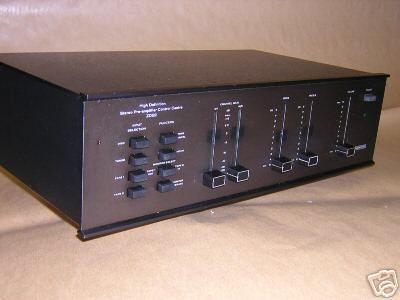
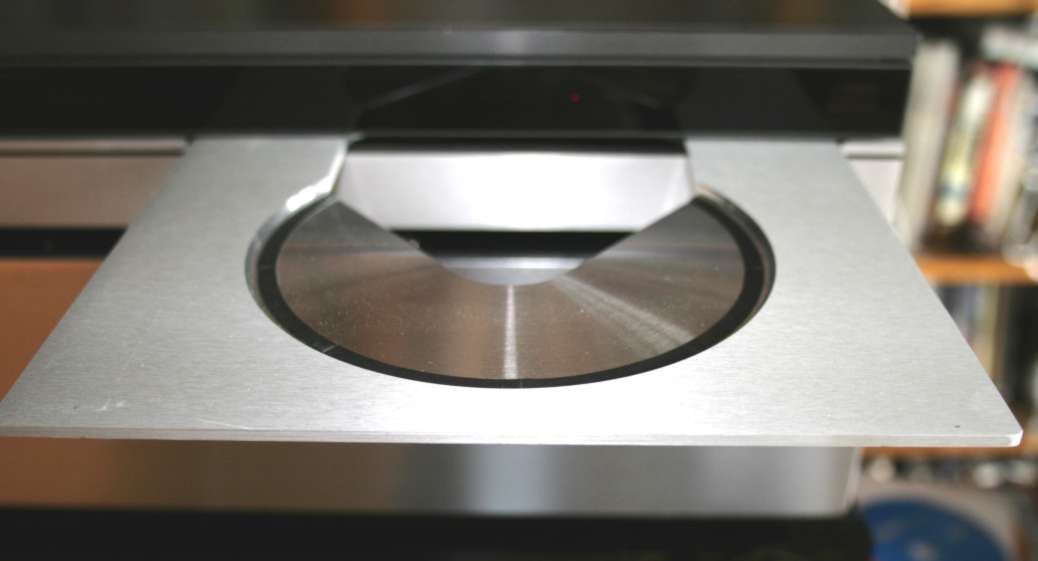
A couple years ago I began, first by chance and almost casually, to look for these classy, '70s designed and built gears - i.e I purchase a myth of mine, that Radford HD-250 integrated amplifier so out-of-reach, price-wise, back in early '70s, last year the Bang & Olufsen CD-5500 (I know: it's not dating from '70s, BUT it strongly reminds Pantone-style and the like and it's absolutely well-mating to my purpouses and aesthetics goal), and very recently I found a gorgeous pair in mint conditions of Grundig Audiorama 7000 in butter-white finish and inox tripod.

It's amazing how this gears harmonically blend to each other, like this dated, decades old North European design has a lineage and a class by itself, modern but still keeping a timeless human soul, a man friendliness opposed to overcomplicated stuffs... can't avoid to quote a friend who spent BIG bucks for a top of the line german-made Bulthaup's 15 meters long, fully automated kitchen... his wife isn't able to use it properly, too much electronic and complexities involved... and they very often go to the restuarant or pizzeria because they're so worried about this kitchen. Unfriendly gourmandise and domothic...

Not by chance, the Pantone-styled audio system is my wife music system... the B & O disk player is always "ON", it's enough to press on the front panel to open in a fraction of second the solid aluminium CD-drawer: that's all. Radford's amp has a "ON/OFF" switch, period... that's enough for my wife... and for myself, sometimes, as well!

Women like music AND do not like audio... why? My wife recognizes a good listening from an average one, BUT only with the stylish music system relaxes herself without being over-distracted by horns, tubes and various fussyness involved in vinyl playback she hates...

... mhhhh... something to think about...

Monday, June 8, 2009

Hugh Hopper passed away yesterday, June 7th 2009


... as I loved so much this musician, as myself, the many who loved him for his art and multi-layered skills, we do not need words to express the deep, deep sadness we feel after learning about the untimely death of the great Hugh Hopper.

... hoping it will not sound rude (as the great song was written by Robert Wyatt), "Moon (won't be) in June" for him, anymore...

R.I.P. and let's play, fondly, his "1984" in the next hours.

WJAAS - A classy way to clean/undust vinyl records


... much better and no-global than the usual, expensive "audiophile" stuff - i.e. carbon-fiber brush, I recently found a classy super smooth, and most of all, super dust capturing item;-):

It's a 10 cm (right the size of a record side...) "Vajo/Kozan squirrell", extra-thin hairs coming from this exotic squirrell tail from Siberia (sounds snobbish and unheard enough, pals?;-))); such a classy item is used in restoring ancient painting-frames with golden leaves and the like.

It's a brush absolutely nicely and flawlessly performing, leaving record surface without static for, at least, the whole listening record-side... I've been impressed by the anti-tics/tocs which this humble brush performed, without any bristle left on record surface.

A cheap purchase, at about EUR 10 per brush, maybe worth someone attention.

Here is a useful link and instructions:

Kazan Vajo brushes - will be enough to touch some wool felt to electrify the brush, which will capture dust on record surface.

Saturday, June 6, 2009

Berlin's SCHOOL of SOUND - Part 2


... a school during students vacation... empty classrooms, graffitis in the toilets, dark corridors... and people from Germany, Norway, Italy, USA, Netherlands, France, Sweden, UK gatheringchattingeatinglisteningswappingideas&hints&experiences... something almost surreal... something which, for the second time, gives to Berlin a musical and living flavour quite uncommon everywhere.

Some classrooms were converted in laboratories, another in lectures about record collecting, exotic labels and sought-after printings, then another concerning hum and RFI fighting in amps and music systems, and music, music... and chatting... and laughing, smoking pipe and/or cigar, having great, SUPERB Cao Lilla's turf one zillion years old Islay whisky and listening to this ECM or that Verve or Blue Note... or having been able to listen to a full side of Can's "Tago Mago" without being shot or blamed or booed;-) by "Jazz at the Pawnshop's Church" adepts;-))))

Cannot understand why, but when in Berlin, I feel at home... is a pulsating, lively, yet shy city... full of trees, so good bread and food, and always those beautiful women on their bikes, hairs and faces in the chilly wind... braveheart.

Meeting old and new friends, in music... that's it... a special event, indeed, where the whole is FAR more & better than the sum of parts... not an unworking speaker or a microphonic tube or... the rain on first day are able to distract from the pleasure of being all together in the name of music for three days... Woodstock's ghosts in the new millenium?!?!

Berlin's SCHOOL of SOUND - Part 1


Entered quite late in the evening in an audio converted emptied classroom, like transported by a very nice sound... a man in his sixties, elegant in a linen butter-white dressing, was in a corner, white hairs and bold eyes.

I waited for the solo sax piece finished and then asked: "Nice recording... who's the musician? ... and the sound engineer?"

With a smile he only took a disk cover, showing it to me... then smiled again...

That was my first meeting with Knut Becker and his HEAR recording label!

He - not alone, nor the first... BUT cleverly - approaches the noble art of recording "holistically" - i.e. the "H" in the logo - asking to musicians for single takes, no editing, no digital reverb... only uninterrupted, flowing music.

The HEAR catalog is quite impressive: viola da gamba duo (Annette Oderstedt & Hans Reiners - The Passionate Leeras), solo baritone sax (Gert Anklam - Konzert fur B.) were the two titles which captured my attention and which herr Becker gave to me.

The recordings, extremely well made, used digital, large reverberant halls and Schoeps' KFM-6 spherical microphones (SCHOEPS KFM 6 -— The spherical design and matte-gray surface finish of Schoeps' KFM 6 ($6,699) resembles a binaural dummy head and follows similar principles. The KFM 6 records at a fixed angle of 90 degrees and is designed to yield a natural impression of space, depth and image. Two pressure transducers are mounted flush on the surface of the 20cm diameter sphere, acting as an acoustic baffle. The KFM 6's directionality is essentially constant throughout the audio frequency range, which is 18 to 16k Hz. The KFM 6's sensitivity is rated at 100 mV/Pa, its signal-to-noise ratio is 77 dBA and it handles 123dB SPL. It accepts 12- or 48V phantom power, ships with a suspension mount, a KG ball-and-socket joint for stand-mounting, a “Y” adapter cable, 5-pin XLR stereo cables and a wooden case.... the result are very impressive.

The Gert Anklam's live recording is, most of all, very, VERY seldom heard music... a 270 invited audience were there during the concert/recording and they're clearly audible, breathing, snorting, living during the (rehearsed) improvisation.

The baritone sax in Gert Anklam's skilled hands reminds me of Ludwig Streicher's singing double-bass I adore... incidentally, two large instruments capable of unheard finesses and nuances spreading on more octaves, while mostly used as humble colours in orchestra.

The music is LaMonte Young, Jon Hassel, Terry Riley-esque... the musician is walking on the stage and the soundstage is HUGE.

... but most important, it is great music, masterfully played and recorded, sure worth further investigations.

... and herr Becker only smiled when I asked "who recorded this"...

Gert Anklam's site

Friday, June 5, 2009

WJAAS - Matt Mullenweg visiting Shindo Labs


A nice, nice recent report in Tokyo Ken Shindo's atelier by Matt Mullenweg...


Shindo's World/>


Thanks Matt for the great shots!

Monday, June 1, 2009

WJAAS - The Headshells Survey (reprise) - B/A - Bosouem Acoustics' "Big Nose" universal headshell - Part 2


... despite the ugliness and weird looking of B/A headshell, something great is happening, folks...
After some days I didn't used nothing but the Oosawa-san's cross-coils MC cartridge mounted on an RS-3 rotary headshell, I wanted to re-try, better re-listen to the Miyajima-san Shilabe MC cartridge and mounted it for the second time on the Big Nose.
Tuned the VTF to 3,2 grams and... what this cartridge does when used with its own Miyajima ETR-800 Super-Permalloy core transformer and Bosouem Acoustics headshell as a combo, is to be heard, period.

I'm not saying Shilabe surpasses Verito Z or Lumiere DST... trying to be unbiased as possible, as they're all of a special breed, no exception, BUT what I believed to be hardly impossible to improve - i.e. Verito Z or Lumiere DST used with ETR-800 or WE 618B... all blew away in two sides!

As recently happened with LCR RIAA and Telefunken EC 8020 phono-stage, only few days after, something I had in a closet proved to be a major improvement in details and trueness.

These steps onward are someway sad, as I fully understand Ikeda-san, the japanese audio maven (not related with Fidelity Research and Ikeda phono products) who had to quit his job to fully devote himself to music and audio, back in the '70s... in my humble shoes, dedicating few hours per month to this annihilating, so satisfying activities make me wonder "where" I would be, musically, if I would be able to apply my full-time attention.

Lunatic, getting nut, needing a good shrink... maybe... what's pretty sure and crystal clear is that the never ending improving capabilities of my system and, most important, of my ears natural skills are impressive to me, myself and I, indeed!

What will happen when I'll install Thomas Mayer's LCR Riaa/WE437A and 801A 4-chassis preamp?

Will I get more music? Will I blissfully understand what the composers meant with this or that silence among notes? Will I finally obtain from most of my records what I'm able to filterless enjoy through my Telefunken M-15A spinned master-tapes or from a real instrument in front of me?

Will I have to leave this daily job and seclude myself on a hill in Western Honshu (Chugoku), hermit among hermits, a music freak, a full-time sound monk, taking full enjoyment from the truest Music ever: wind and birds and rain and that far, far bell?

... who knows what's in everyone karma;-) - for the moment I must, prosaically, say that the B/A Acoustics with the Shilabe MC-cart made by Miyajima-san is giving to me shivers in Gotorama: Don Cherry's trumpet is untamed, free as the air, limitless, undistorted, unfearsome, brave and true, right.

... let's leave the rest in the Music God and Goddess' hands.

I'm happy... quoting the late Tim Buckley... Happy/Sad.

Sunday, May 31, 2009

Dieter Ennemoser and C37 theory - a human friendly science or...?


C37 Book - English


"The Character of Sound" by Dieter Ennemoser

The C37 book "The Character of Sound"
by Dieter Ennemoser
ISBN 3-907073-32-0
German and English text in one book.


Contents:

Introduction 5
The Decisive Idea 5
The Ear as a Multiple Filter 7
The Brain as a Complementary Filter 7
The Diversity of Sounds and Their Classification 8
The Effect of Dampening 8
The Transient Response,
or How the Code Hid Behind Itself 9
The "Warm Sound" 10
The Supervowel of the Singer 10
The Supervowel in Musical Instruments 12
The Timbre 12
Perfect Pitch 13
The Existence of "Natural Overtones" 13
Musically"True or"Natural" 14
The "Supernatural" Sound 14
Records, Compact Discs and the Acoustic Paradox 15
The Example of Loudspeakers 16
Technical Details of the C37 Pattern 16
The Musical Metre as a Consequence of the
C37 Pattern 17
Conclusions 19


Pan Verlag


Büro Deutschland:
Naumburger Straße 40
D - 34127 Kassel
Telefon: 0049/(0)561 50049360
E-Mail: info@pan-verlag.com


Distribution of PAN editions

Schweiz/Switzerland:
Musica Viva AG
Schützenmattstr. 1
CH - 8180 Bülach
www.musicaviva.ch

Weltweit/worldwide:
Merseburger Verlag Berlin GmbH
Naumburger Straße 40 - 34127 Kassel
Telefon: +49 561 789809-11
Fax: +49 561 789809-16
E-Mail: vertrieb@merseburger.de


Excerpt from
"The Character of Sound"
by Dieter Ennemoser


The Musical Metre as a Consequence of the C37 Pattern


This suggestion came from my sister Heidi Ennemoser who, in the course of her training as a conductor,
experimented with the effect of various musical tempi on the perception of the listener.
She found out that different people, when hearing the same tempi, had the same or similar feelings.
The fact that these results were quite decisive lead me to the question: Is the perception of tempi somehow
linked to the C37 pattern and the perception of sounds? One particular quality of the C37 pattern is its
octavability in both directions.
This implies that by halving the C37 frequencies several times one could get within a frequency range of
"beats per minute".
What would the metronome numbers resulting from these calculations be like? Would my expectations be
proved wrong?


After some calculations, I had established the following metronome numbers:

61,4 63,0* 66,8 70,3 75,5 82,8 88,1 93,0 100,0 109,0 113,7 123,0 126,0*


134,0 141,0 151,0 166,0 176,0 186,0 200 beats per minute.

(* = new, not in the book)


I made measurements and comparisons and came to the following conclusions:

The C37 tempi feel natural and full and in harmony with the body. The body seems to respond to them.
Just as a swing can be made to go ever higher by a series of small repetitve pushes, so the correct
tempi induce distinct reactions in the body.
Even with the sound of a pulsating metronome (it is an electronic one with a little loudspeaker) I could
detect differences due to the tempo: The beating of the C37 tempi appeared clearer, firmer, and more forceful.
Intermediate tempi sounded nasal and flat, as though striving to recover from an unstable position.
A new question in evitably emerged: How does a 3/4 time or a 6/4 time fit into the system?
Are only the whole bars important or the individual beats also? - It turned out that both the bar tempo as
well as the beat tempo (i.e. treble the metronome number for 3/4 time) should follow the C37 pattern.

This, of course, means a reduction in the number of tempi available. Calculation shows that only the following
metronome numbers meet these criteria: 61.4 66.8 75.5 82.8 100.0.

These tempi, because of their stronger body resonances, also appear very forceful in (2/2) time whereas the
remaining five tempi 54.5 70.3 88.1 93.0 and 113.7 suggest lighter, more graceful themes and may be able
to express more subtle registers.


Conclusions:

What can be concluded from these results? Our perception of tempi reveals itself as the extended oscillation
of our constituent atoms! This is how we share a specific common relationship; who we are, what we are made of, and what we express through music. This specific relationship is called musicality.

(Naturally these figures, as those for the frequencies noted in the previous chapter, only represent the current
extent of my research and I make no claim for their accuracy or cempleteness).
We perceive musical tempi not as an objective physical phenomenon but through the unconsciously felt vibrations of our own bodies. That is why, in century of technical progress, the determined attempts to impose new structures on music through mathematical formulae have been unable to alter anything. And when pedantics try again and again to deny the nature in us and declare everything to be relative, nature always reemerges as the dominant factor.

Any musician who has played in an orchestra knows the feeling of suddenly tuning into the same beat
transmitted from conductor to player to player, or from player to player to conductor, or occasionally even from
listener to conductor to player to player.

A conductor will not lose his creative freedom because of the discovery of the existence of natural vibrations as
one might first assume - not any more than the painter would be restricted in his creative art by a knowledge of
the functioning of the human eye. Knowing these natural relationships, he can become increasingly conscious
of the effect that the choice of tempi, and the increasing or reducing of speed, and tempo shifts have upon the
expressive value of music. He will also realize the importance of this instinct, will cherish it and perhaps even
revive experiences or abilities buried for a long time.

... WE 437-based phono stage... Audio Consulting AG from Swirzerland did this way...


Audio Consulting of Switzerland, the super esoteric workshop run by Serge Schmidlin which plainly said, simply hates caps and AC, while loves battery-operated P.S.U. and Cocobolo exotic wood;-)), also used the elusive WE 437A triode in his CHF 165.000 (165.000,00 CHF = 109.296,42 EUR i.e. Euro 1 CHF = 0,662403 EUR - 1 EUR = 1,50966 CHF) three tiers phono-stage... have a look also to the 6Moons review and visit to the workshop itself...

Their philosophy is the following:

Philosophy - Emotion in Sound


"Music should strike fire from the heart of man, and bring tears from eyes of woman."

- Ludwig van Beethoven -

"Things should be as simple as possible, but not simpler."

- Albert Einstein -

We would like to explain our philosophy :
There is always one optimum solution for a given problem.
It is very time consuming to find it, but this is the only way to make real progress.

A very helpful thought from the "Petit Prince" by Antoine de Saint-Exupery:

"We only know the things that we tame, said the fox. People no longer have the time to know anything. They buy things already made from peddlers. But since there are no peddlers of friends, they no longer have friends. If you want a friend, tame me!
Goodbye, said the fox. Here's my secret; it's very simple: we see well only with the heart. The essential is invisible to the eyes."

- English version by Richard Waswo -


Very interesting, indeed... also if, dear Ludwig, music brings tear to my eyes, as well;-)

Wood and music - an heavenly match - Hi-end Swiss' style

Thanks to 6Moons and to Audio Consulting AG.

P.S. (written at a later date) - my friend Georges from Athens told me about the following: the very WE437A-based phono-preamp showed on above pixes was destroyed during last Munchen Audio Fair, due to a fire which unfortunately happened during the night in Serge Schmidlin/Jean Hiraga's exhibition-room... a very sad evenience.

Friday, May 29, 2009

ECM 2009 - the year of jazz/arabic fusion?


They already, first among all or so, to mix arabic culture and tradition with jazz, a no-brand music like the Anouar Brahem, a musican I deeply love and who I often quote, but what Manfred Eicher and his ECM did this year sounds still more groundshaking: jazz and arabic language, texts from Coran and Jelauddin Rumi. AMAZINGLY new and ancient at same time, yet a superb mix.

"Fasil" ECM 2076 (2009) first... yes, I already quoted this very disk... but maybe worth repeating and requoting it... "Fasil, based on an idea by guitarist Marc Sinan and author Marc Schiffer, tells of the life of Aisha, the great love and youngest wife of the prophet Mohammed, in the course of an inspired song cycle. The improvisations take as their inspirational starting point fragments of Koran recitations recorded by Marc Sinan in Turkey. Together with Julia Hülsmann’s songs they form an Ottoman suite, a Fasil. Highlights in this transcultural project include exceptional performances by Sinan himself, and by Yelena Kuljić in the role of Aisha. The singer was recently described by the Frankfurter Rundschau as “the most thrilling new voice in the current jazz scene.”

and...

"As Ney" ECM 2084... "The melody and texture of the Persian language exerts a subtle hold on the composing and improvising of the Berlin-based Cyminology quartet, heard here on its ECM debut Bandleader Cymin Samawatie, charismatic German-Iranian vocalist, sings her own Farsi lyrics as well as poetry of Sufi masters Rumi and Hafez, and 20th century verse of Forough Farrokhzäd. “As Ney”, an album titled after Rumi’s “Song of the Reed-Flute”, is quietly compelling, proposing a chamber jazz from new and fresh perspectives. An unusual and highly attractive ‘intercultural’ recording whose sensitive musicianship draws the listener in."

Strangely. but not so much, they are both female vocals-based GREAT disks... a new boundary is over, thanking ECM... give'em a try!

Wednesday, May 27, 2009

WE 437A/LCR Phono-stage and 801A/10Y Line-stage project - Thomas Mayer's at work!


The result of sooo pleasant, recent Berlin's gathering and endless audio and music chatting has been the above: Thomas Mayer is definitely at work on my behalf seeking for my next all triodes/tube rectified, separate P.S.U. four-chassis LCR phono-stage and line-stage pre-amps.

After my recent exposure to the glory of a Telefunken EC 8020 based phono-stage, I finally understood 'twas time to go for a special project: an LCR based on classic Tango EQ600P LCR modules, using the most exotic and sought after of the super-high transconductance, super-low impedance and highest Mu triodes ever: His Majesty the Western Electric 437A triode (sort of an U.S. version of the mega-rare German-made Telefunken's EC 8020).

All the above mentioned goodies will be painstackingly filtered by hands, skill and knowledge of one of the truly passionate, out-of-the-choir, leading audio designers and builder around, in Europe or elsewhere: Thomas Mayer from Germany. His knowledge of the basics, musical and aesthetic good taste and respect for the data-books is filtered by a braveness and a dadaist experimenter fever which is simply rare these days.

It's always a great experience to discuss and fiddle and think about the building of a one-of-a-kind audio gear... I still fondly remember - in my limited, yet sincere experience - when I built a couple of WE 300B based monoblocks... every aspect, down to the last screw and inch of wire was worth long chatting around... all in the name of Music.

So... here we go: found a quartet of '70s WE 437A, one pair in the USA and the other pair in Japan; found the classic Tango's EQ600P LCR pair, discussed about circuits, tubes, sockets, metal-chassis, colours, wooden-boxes and aesthetics, TVC by Dave Slagle and among the best components and parts around... well, knowing someone, a friend, is making drawings, thinking, assemblying, soldering for you alone, is bespoke care and salt to life and to this passion.

... about TVC (Transformers Volume Control)... here is something I recently read on the matter, which deeply intrigued me...

"Trasparency & ambience": There is a great sense of clearness, possibly due to ground decoupling, and a much improved ambience retrival.
"All bandwidth sounds at the same level" Another reason for going TVC is that all the part of the sound spectrum "works" in the same way and direction. We realized that with the stepped resistor attenuator we used previously, at some level-settings and under certain conditions, the sound started to "shout" (at very high level).
"Whispering with body and guts" at very low level - so nice at midnight - with previous volume control, sound seemed quite "thin", this will be another surprise: you can have a great "body" also when listening at low level.
"Pump up the Volume" We don't know why, but from the time we've put this pots in the chain we're pleasantly listening at an higher level than before; the tonal balance seems more natural & open and also power flows more gently, effortlessly natural.
At the end we found ourselves listening (almost without fatigue) at a so high level we could barely chat to each other."

... the above points, taken from an Italian blog, sounded so true, I simply had to try TVC in my system and yes... it worked as per above mentioned hypes!

Unfortunately the TVC's equipped gear was on loan... but...

... more to come.

........

(added at a later date...)

Thomas Mayer just wished to add the following:

"Dear Stefano,

thanks for the kind words...

It is an honor for me to construct these music making machines for such a fine gentlemen who has such a refined taste.
Thanks for the interesting chats we had in Berlin. And thanks for the trust you put in me!

best regards

Thomas"

... my pleasure, Thomas!

Friday, May 15, 2009

Himalaya Blues


Knut Reiersrud/Hans Fredrik Jacobsen/Vajra
Himalaya Blues
Grappa
2004

Norwegian blues guitarist Knut Reiersrud has collaborated in the last 25 years with blues legends such as Buddy Guy and Otis Rush, when he was only 18 years old, and with experimental guitarists such as Henry Kaiser and David Lindley, while he was acting as researcher, consultant and production assistant in Kaiser and Lindley's musical exploration of Norway ( The Sweet Sunny North, Shanachie, 1994; The Sweet Sunny North, Vol.2, Shanachie, 1996). Reiersrud was always able to combine the musical traditions of Norway, West Africa and America, and in Himalaya Blues, together with Norwegian winwood and reed player Hans Fredrik Jacobsen and Nepalese folk band Vajra, he proves that he can also cope with the musical traditions of the Indian subcontinent.


Himalaya Blues was conceived during a 2000 tour of Reiersrud and Jacobsen's band, The Funky Homosapines, to India and Nepal. During that tour the band played at the jazz festival of Katmandu, Jazzmandu, where they united with Vajra, a band that works to keep the classical folk music of Nepal alive. The Nepalese folk tradition is very similar to the classical music of north India, but it's based on a more short and catchy melodic phrases. The Funky Homosapines and Vajara were reunited again at the beginning of 2003, and then this beautiful recording was completed.


The first track "Kuvisa/Gothald" begins with field recording of the urban commotion of Katmandu but the joyful noise quickly dissolves into the airy meditative sound of the flutes of Jacobsen and Vajra's Raman Maharjanis, both of them portraying the similarities between the beautiful mountain scenery of Norway and Himalayan Scenery. The second track is an arrangement of the popular religious Newari song "Byanchuli" that Jacobsen and Reiersrud turn into a kind of funky Norwegian folk song, using whistles and driving rhythm guitar. Reiersrud sings gently the traditional gospel "She's Got the "Whole World," now called "Mother Himalaya," with a flute and tabla backing, answered by a Sanskrit translation of that Afro-American song, sung by Vajra's Santosh Bhakta Shresta, backed with sarod, flute and tabla backing, until the last chorus in which Reiersrud and Santosh sing together and are joined by the bamboo flute, the bansuri.


Reiersrud brings the music back to Norway when he adapts an odd tuning of the Norwegian noteworthy Hardanger fiddle player Hallvard T. Bjørgum into a kind of country blues playing, and using the guitar sometimes as a West African kalimba. Reiersrud also composed also "Shangri-La," based on a Pakistani folk tune and originally written for the Norwegian vocalist Deepika, daughter of Pakistani parents and a a one-time collaborator of famed Norwegian saxophone player Jan Garbarek ( Ragas and Sagas, ECM, 1990). This song was recorded before with David Lindley in a much more Middle Eastern version when Reiersrud played the oud and Lindley the bouzouki. The current version drives the tune into a folky Indian song.


Jakobsen's "Loknes" is an enchanting demonstration of the affinity between the folky flutes of Norway and the bansuri. "Golden Tap" is a truly collaborative union of the two bands, where you can not discern the sound of the guitar from the sarod, the percussion from the tabla or the Norwegian flutes from the bansuri. This album ends with an almost tweve-minute musical feast, "Himalaya Blues," that spellbound the silent crowd at the historical place of Patan Durbar Square with the touchy and melodic fusion of these great musical traditions, creating a true one world music.


Visit Knut Reiersrud on the web.


Tracks: Kuvisa/Gothald; Morning song/Byanchuli; Mother Himalaya/Himali mata; Sylvartun ; Shangri-La; Loknes; Ballad of the Sad Young Tigers/ Jawan Bagha Kobyatha; Golden tap/Lunhiti; Himalaya blues (Around the jungle/Ban Bihaar); Himalaya blues video version.

Personnel: The Funky Homosapiens: Knut Reiersrud - guitars, vocals on track 3; Hans Fredrik Jacobsen - willow flute, metal flute, og bone flutes, saksophones, two-rowed accordian; Audun Erlien - bass on tracks 2,5, 8 & 9; Anders Engen - drums tracks on 2, 5, 8 & 9, percussion on track 6. Vajra: Santosh Bhakta Shresta - israj, vocals; Raman Maharjan - bamboo flute; Suresh Raj Bajracharya - sarod; Bidur Rajkarnikar - tabla.


Thanks to my friend Kim Bjornqvist from Oslo for hinting this... sure worth exploring it! Thank you, Kim!

Thursday, May 14, 2009

IVIE TECHNOLOGIES INC. IE-30A and Damiano Pinazza's Holy Hands


As I recently wrote, I was pushed by Dietmar Hampel from Germany, to use pink noise and Real Time Analyzer to finely tune my speakers system, I purchased an Ivie Technologies Inc. IVIE IE-30A RTA with "Class 1" measurement-microphone and an IVIE IE-20B Pink/White noise generator, the Rolls-Royces in the field, '80s style, proudly and painstackingly hand-made in Utah, U.S.A.

I privileged the super-fast, real-time attitude the IE-30A's has vs. the computer-based Clio's or more recent IVIE's, because, really, with a self contained, battery operated machine you can do everything everywhere!

Measuring a church organ or an orchestra during a concert, the floor noise from the pub nearby, at 2 A.M.;-))) or the crickets and birds singing in the countryside or a thunder S.P.L. during a storm... all this and more... plus the AMAZING capability of fine tuning a complex horn-based speakers system in one hour... while, before, I was time consuming my ears (and patience...) for weeks!

After few months of great improving of my skills in IVIE's use, greatly, GREATLY supported by Damiano Pinazza, "The Archibishop of IVIE Church" (c/o Audio Network Technology Srl);-), I'm now able to use in a cool way, also if at maybe 20 percent of its full and virtually endless possibilities, the mighty IE-30A: possibly my best audio-related purchase in years, period.

After my positive experience, two dear friends of mine followed me in this technically challenging trip: Georges from Athens and Giovanni, my pard, from Naples.

They both purchased the full combo: IVIE IE-30 and IE-20... must say I paid something for mine, BUT I never had any problem, while both my friends had some troubles which costed some pain to the wallet and in stress terms, after they saved on original purchase.

... and that's what I wish to share: an IE-30A began to show some malfuntions and I promptly contacted Damiano Pinazza at "The IVIE Church Headquarters", in Bovisio Masciago (Milan).

After some days, he called at my mobile, saying that, to his great regret, the sturdy, IE-30A was giving to him some troubles, enough to seriously think for a trip to Utah's IVIE Technologies Inc.'s official maintenance workshop for a fully (and quite expensive) overhaul.

Sounded painful, but OK... me and my friend agreed...

Yesterday, a new phone-call and five mails containing some pixes... to say it short: Damiano was sooo hungry and deluged he didn't find the trouble in Giovanni's IVIE's that he, at 5,40 A.M., was in his workshop, where he dismantled the machine and re- did some soldering, also changing some faulty or leaking tiny caps...

The pixes, beside a dismantled IE-30A during the troubleshooting, show a tired, yet happy and satisfied, proudly smiling Damiano Pinazza with Giovanni's fully serviced and re-calibrated IE-30, after 4+ solid hours spent at the bench with soldering iron in HOT-mode, with LEDs blinking again in the dimmed light of his workshop.

Now, what can I say?!?!? It's tooo weird in this imperfect world a successful, wealthy young manager, loose his sleep for restoring an old measuring laboratory gear... without shame or drums&trumpets, he humbly used his skills and passion and won over the kicking, malfuntioning IVIE's.

Thanks a lot, Damiano, for your being the nice, NICE person you are, for your attitude and "holy hands", for keeping your feet on the ground and for the lesson you gave, keeping the "quality of life" ideal in good consideration - i.e. relationships first - as most important.

... and last but not least, for not giving up and winning on the Machine.

I owe to you a lot... and no, it's not simply a relationship between faulty gear owner/technician... it's a Church, do you remember?!?!;-)))

There is music involved, so it's Archibishop vs. a faithful music-lover in troubles.

Thanks, Damiano... thanks and... amen!
;-)