Search this Blog

Pageviews

Friday, May 15, 2009

Himalaya Blues


Knut Reiersrud/Hans Fredrik Jacobsen/Vajra
Himalaya Blues
Grappa
2004

Norwegian blues guitarist Knut Reiersrud has collaborated in the last 25 years with blues legends such as Buddy Guy and Otis Rush, when he was only 18 years old, and with experimental guitarists such as Henry Kaiser and David Lindley, while he was acting as researcher, consultant and production assistant in Kaiser and Lindley's musical exploration of Norway ( The Sweet Sunny North, Shanachie, 1994; The Sweet Sunny North, Vol.2, Shanachie, 1996). Reiersrud was always able to combine the musical traditions of Norway, West Africa and America, and in Himalaya Blues, together with Norwegian winwood and reed player Hans Fredrik Jacobsen and Nepalese folk band Vajra, he proves that he can also cope with the musical traditions of the Indian subcontinent.


Himalaya Blues was conceived during a 2000 tour of Reiersrud and Jacobsen's band, The Funky Homosapines, to India and Nepal. During that tour the band played at the jazz festival of Katmandu, Jazzmandu, where they united with Vajra, a band that works to keep the classical folk music of Nepal alive. The Nepalese folk tradition is very similar to the classical music of north India, but it's based on a more short and catchy melodic phrases. The Funky Homosapines and Vajara were reunited again at the beginning of 2003, and then this beautiful recording was completed.


The first track "Kuvisa/Gothald" begins with field recording of the urban commotion of Katmandu but the joyful noise quickly dissolves into the airy meditative sound of the flutes of Jacobsen and Vajra's Raman Maharjanis, both of them portraying the similarities between the beautiful mountain scenery of Norway and Himalayan Scenery. The second track is an arrangement of the popular religious Newari song "Byanchuli" that Jacobsen and Reiersrud turn into a kind of funky Norwegian folk song, using whistles and driving rhythm guitar. Reiersrud sings gently the traditional gospel "She's Got the "Whole World," now called "Mother Himalaya," with a flute and tabla backing, answered by a Sanskrit translation of that Afro-American song, sung by Vajra's Santosh Bhakta Shresta, backed with sarod, flute and tabla backing, until the last chorus in which Reiersrud and Santosh sing together and are joined by the bamboo flute, the bansuri.


Reiersrud brings the music back to Norway when he adapts an odd tuning of the Norwegian noteworthy Hardanger fiddle player Hallvard T. Bjørgum into a kind of country blues playing, and using the guitar sometimes as a West African kalimba. Reiersrud also composed also "Shangri-La," based on a Pakistani folk tune and originally written for the Norwegian vocalist Deepika, daughter of Pakistani parents and a a one-time collaborator of famed Norwegian saxophone player Jan Garbarek ( Ragas and Sagas, ECM, 1990). This song was recorded before with David Lindley in a much more Middle Eastern version when Reiersrud played the oud and Lindley the bouzouki. The current version drives the tune into a folky Indian song.


Jakobsen's "Loknes" is an enchanting demonstration of the affinity between the folky flutes of Norway and the bansuri. "Golden Tap" is a truly collaborative union of the two bands, where you can not discern the sound of the guitar from the sarod, the percussion from the tabla or the Norwegian flutes from the bansuri. This album ends with an almost tweve-minute musical feast, "Himalaya Blues," that spellbound the silent crowd at the historical place of Patan Durbar Square with the touchy and melodic fusion of these great musical traditions, creating a true one world music.


Visit Knut Reiersrud on the web.


Tracks: Kuvisa/Gothald; Morning song/Byanchuli; Mother Himalaya/Himali mata; Sylvartun ; Shangri-La; Loknes; Ballad of the Sad Young Tigers/ Jawan Bagha Kobyatha; Golden tap/Lunhiti; Himalaya blues (Around the jungle/Ban Bihaar); Himalaya blues video version.

Personnel: The Funky Homosapiens: Knut Reiersrud - guitars, vocals on track 3; Hans Fredrik Jacobsen - willow flute, metal flute, og bone flutes, saksophones, two-rowed accordian; Audun Erlien - bass on tracks 2,5, 8 & 9; Anders Engen - drums tracks on 2, 5, 8 & 9, percussion on track 6. Vajra: Santosh Bhakta Shresta - israj, vocals; Raman Maharjan - bamboo flute; Suresh Raj Bajracharya - sarod; Bidur Rajkarnikar - tabla.


Thanks to my friend Kim Bjornqvist from Oslo for hinting this... sure worth exploring it! Thank you, Kim!

Thursday, May 14, 2009

IVIE TECHNOLOGIES INC. IE-30A and Damiano Pinazza's Holy Hands


As I recently wrote, I was pushed by Dietmar Hampel from Germany, to use pink noise and Real Time Analyzer to finely tune my speakers system, I purchased an Ivie Technologies Inc. IVIE IE-30A RTA with "Class 1" measurement-microphone and an IVIE IE-20B Pink/White noise generator, the Rolls-Royces in the field, '80s style, proudly and painstackingly hand-made in Utah, U.S.A.

I privileged the super-fast, real-time attitude the IE-30A's has vs. the computer-based Clio's or more recent IVIE's, because, really, with a self contained, battery operated machine you can do everything everywhere!

Measuring a church organ or an orchestra during a concert, the floor noise from the pub nearby, at 2 A.M.;-))) or the crickets and birds singing in the countryside or a thunder S.P.L. during a storm... all this and more... plus the AMAZING capability of fine tuning a complex horn-based speakers system in one hour... while, before, I was time consuming my ears (and patience...) for weeks!

After few months of great improving of my skills in IVIE's use, greatly, GREATLY supported by Damiano Pinazza, "The Archibishop of IVIE Church" (c/o Audio Network Technology Srl);-), I'm now able to use in a cool way, also if at maybe 20 percent of its full and virtually endless possibilities, the mighty IE-30A: possibly my best audio-related purchase in years, period.

After my positive experience, two dear friends of mine followed me in this technically challenging trip: Georges from Athens and Giovanni, my pard, from Naples.

They both purchased the full combo: IVIE IE-30 and IE-20... must say I paid something for mine, BUT I never had any problem, while both my friends had some troubles which costed some pain to the wallet and in stress terms, after they saved on original purchase.

... and that's what I wish to share: an IE-30A began to show some malfuntions and I promptly contacted Damiano Pinazza at "The IVIE Church Headquarters", in Bovisio Masciago (Milan).

After some days, he called at my mobile, saying that, to his great regret, the sturdy, IE-30A was giving to him some troubles, enough to seriously think for a trip to Utah's IVIE Technologies Inc.'s official maintenance workshop for a fully (and quite expensive) overhaul.

Sounded painful, but OK... me and my friend agreed...

Yesterday, a new phone-call and five mails containing some pixes... to say it short: Damiano was sooo hungry and deluged he didn't find the trouble in Giovanni's IVIE's that he, at 5,40 A.M., was in his workshop, where he dismantled the machine and re- did some soldering, also changing some faulty or leaking tiny caps...

The pixes, beside a dismantled IE-30A during the troubleshooting, show a tired, yet happy and satisfied, proudly smiling Damiano Pinazza with Giovanni's fully serviced and re-calibrated IE-30, after 4+ solid hours spent at the bench with soldering iron in HOT-mode, with LEDs blinking again in the dimmed light of his workshop.

Now, what can I say?!?!? It's tooo weird in this imperfect world a successful, wealthy young manager, loose his sleep for restoring an old measuring laboratory gear... without shame or drums&trumpets, he humbly used his skills and passion and won over the kicking, malfuntioning IVIE's.

Thanks a lot, Damiano, for your being the nice, NICE person you are, for your attitude and "holy hands", for keeping your feet on the ground and for the lesson you gave, keeping the "quality of life" ideal in good consideration - i.e. relationships first - as most important.

... and last but not least, for not giving up and winning on the Machine.

I owe to you a lot... and no, it's not simply a relationship between faulty gear owner/technician... it's a Church, do you remember?!?!;-)))

There is music involved, so it's Archibishop vs. a faithful music-lover in troubles.

Thanks, Damiano... thanks and... amen!
;-)

Wednesday, May 13, 2009

Vicenza Jazz Festival 2009 - Dave Holland Quartet


... jazz, at last... plain, pure, good, ol' jazz... where everyone's having good time, the drummer and sax take their solos, where people applauds after each of them, shouting "Yeahhhh!" while tapping feet ... that's jazz.

Dave Holland is a living icon: he played virtually with EVERY GREAT JAZZ musician of the last 40 years, period.

You name and can't be wrong... he played with.

I just finished grooving in "Angel Song", one of my "records of the decade"... Dave Holland, Lee Konitz, Bill Frisell and Kenny Wheeler... can't imagine a better record.

Dave's playing is fluid, evocative, various and innovative as it can be, and gives to music a backbone seldom heard.

Also "Thimar" with John Surman and Anouar Brahem, always on ECM, is special to me... BUT the yesterday evening concert was more on the "classic" side of jazz, as I told you... like mr. Holland was showing the easy-going face of his skills and art...

On "A Rio", the drummer, vibes and soprano sax created a superb, exotic, slow climax for double-bass growling, yet so utterly clean and intellegible elucubrations... I was at about 4-5 meters from the group, the only way I can use the live music experience for my weird psycho-acoustic and audio related obsession, and what I heard was the sound of such a group as I feel, perceive it, at home... details, imaging, the standing musician is sounding like a standing musicians and the drums are more self-reverberating, large and omni-directional, yet very frequencies related - i.e. cymbals and drums sounds MUCH different - like marimba and vibes, while double-bass and sax are drier and more pinpointing-focused sounding.

I'm so sorry I someway "uses" a great concert for my "purpouses", sort-of downgrading it... BUT music is so free and high it stands also "this" kind of misuse and abuse.

Everytime Dave Holland was going solo, I was virtually comparing the sound, the Real Thing I had in front of me, actually maybe one of the 3/4 GREATEST living double-bass players (as, unfortunately, the late Scott LaFaro passed away too long ago... way out of league and too missed, since now... and Gary Peacock, Charlie Haden and Barre Philips' what remain...) with the aural memory of Dave Holland as I know since my boyhood from the dozens records I own where he cheerfully, always measured and classy, swings...

... that's my idea, my ideal of music: yes, it's moving, it's exciting, as the musicians are there, alive, like never before, but, most important to me, the very experience gives a load of sonic and aural hinting, like a battery recharging for the home listening sessions... live vs. reproduced don't sound so weird or inappropriate...

That's my approach... enjoying music, appreciating fingers and related skills and refreshing my musical memory, "feeling" the musicans, their sweat, their smiles, their stress or easiness. Meeting in person a gentle, handsome genius like Dave Holland, chatting with him, shaking his hand... and yes, having his seminal "Emerald Tears" and "Conference of the Birds" albums autographed... having him showing his almost foldable custom-made double bass and listening to his witty comments, the kindness of his wife apologizing for interrupting our chatting... well: this is salt to life, spice to the greatest passion ever: Music.

... like the late Frank Zappa said: "Music is Best!"

This apparently childish statement is MUCH more heavy and deep as it appears to be... Music is esperanto, is brotherhood, is a straight, pure language... is unique as every musician is a man, thus unique, per definition. It's a miracle!

Thanks to Riccardo Brazzale.

... some infos on Dave Holland:

Dave Holland was born in Wolverhampton, England on October 1st 1946. He was drawn to music at an early age starting with the Ukelele at age 4, moving to the guitar at 10 and then to the bass guitar at 13. Other than a brief period of piano lessons, in these years he was largely self taught learning the popular music of the day from song books and the radio. At 13 he and a few friends formed a band and began playing at the local clubs and dances. By the age of 15 he had joined another band and as that group was working a lot he decided to leave school and try and earn a living as a musician. It was around this time that in a search for expanding his ideas on the bass guitar that he began listening to jazz and heard on records the great bassists Ray Brown and Leroy Vinnegar. This had a profound affect on him and he quickly got a double bass and began practicing with the records. Although he was still working as a bass guitarist he began going to jazz clubs with his double bass and sitting in with the local jazz players. In the summer of 1963 at the age of 17 he was offered a 3 month job on double bass with a dance band that was playing a summer season at a holiday resort. Following this there was a short tour with a big band that was accompanying the pop singer Johnny Ray and then came an offer of a job in London playing music in a restaurant.

As soon as he moved to London he began looking for a bass teacher and started weekly lessons with James E. Merritt who was the principal bassist of the London Philharmonic Orchestra and teaching at the Guidhall School. In the spring of 1964 on his teachers recommendation he applied for admission to a three year program at the Guidhall school and after taking the entrance exam was admitted with a full scholarship in September of 1964.

This began a period of intense musical experiences. By his second year at the school he was the principle bassist in the school orchestra and was also beginning to work with a wide variety of people in the London jazz community. His early jazz work was with bands that were playing in the New Orleans style of King Oliver and Louis Armstrong but he soon was working with many other groups that ranged in style from swing era to modern.

By 1966 he was beginning to play with some of the London based musicians that were being influenced by the contemporary jazz trends of the time. These musicians included John Surman, John McLaughlin, Evan Parker, Kenny Wheeler, John Taylor, Chris MacGregor and others. Bassists that influenced him during this period included Charles Mingus, Scott LaFaro, Jimmy Garrison, Ron Carter and Gary Peacock. His studies at school introduced him to the works of many contemporary classical composers which also had an important influence on him, particularly the music of Bela Bartok. Other activities included free-lance work with chamber orchestras and a variety of work in studios recording music for television, film, radio and records.

By 1967 he was appearing frequently at the Ronnie Scott Club with such jazz greats as Coleman Hawkins, Ben Webster and Joe Henderson. It was during an engagement there in July of 1968 that Miles Davis visited the club and heard Dave playing and asked him to join his band. Dave moved to N.Y.C. a few weeks later and for the next two years toured and recorded with Miles. When not on the road he worked with many others in the New York community.

It was late in 1970 that he left the band along with fellow band member Chick Corea and together with Anthony Braxton and Barry Altschul founded the group Circle. It was at this time that he started performing on violoncello as well as bass. After working together for a year the group disbanded and early in 1972 Dave joined Stan Getz’s group. He also had the opportunity to work briefly with Thelonius Monk and began what was to be a long playing relationship with Sam Rivers. Later that year he recorded his first album as a leader, the widely acclaimed Conference of the Birds. This was also the year that he began teaching both privately and as an occasional guest teacher at the Creative Music Studio in Woodstock, New York. He left the Getz quartet in the beginning of 1973 and concentrated on working with Anthony Braxton in duo and group situations and with Sam Rivers in duo and another setting. In 1975 he took part in the formation of the Gateway trio with John Abercrombie and fellow band member from the Miles Davis band Jack DeJohnette. This has continued as an occasional project up to the present time. After working with Betty Carter for a few months in 1976 he spent the remainder of the decade working and recording with Sam Rivers. Dave recorded an album of solo bass music in 1977 entitled Emerald Tears and also began performing solo concerts.

The 1980’s began with Dave still working with Sam Rivers but by 1981 he had left the band so that he could turn his attention to putting together his own group. This was interrupted for a year by an unexpected illness but by the end of 1982, after recording the solo violoncello album Life Circle, he was ready to assemble his first full time working band, a quintet. The first version of the group featured Kenny Wheeler, Julian Priester, Steve Coleman and Steve Ellington. Later members included Marvin Smitty Smith and Robin Eubanks. The group recorded three groundbreaking albums and toured extensively until 1987.

Following the disbanding of the quintet he continued working in a trio format and in 1988 recorded the poll winning album Triplicate with Jack DeJohnette and Steve Coleman. He also performed with Hank Jones and recorded two albums with him, one of them with Billy Higgins.

His teaching activities included being appointed in 1983 as artistic director of the summer jazz workshop at The Banff School in Banff, Alberta, Canada, a position he held until 1990, and from 1987 to 1990 a full time faculty position at the New England Conservatory in Boston, Massachusetts.

In 1988 Dave formed a new band, a quartet with Steve Coleman, Kevin Eubanks and Marvin Smitty Smith and in 1989 the group recorded Extensions an album that was voted album of the year in Downbeat magazine and received world wide acclaim.

Other activities included a 1990 world tour with Jack DeJohnette’s Parallel Realities group featuring Herbie Hancock and Pat Metheny, and a Grammy nominated recording with Metheny and Roy Haynes. Since 1992 he has also appeared as a member of Herbie Hancock's trio and in that same year Dave performed on Joe Henderson's Grammy Award winning recording So near, So far.

1993 started with a tour of Europe performing solo concerts after which he recorded his second solo album, and later that year took part in an extensive tour with a special project featuring Betty Carter, Geri Allen and Jack DeJohnette during which the group recorded live at the Royal Festival Hall in London, England. This recording was released in 1994 under the title Feed the Fire.

Early in 1994 Dave formed a new quartet with Steve Nelson, Eric Person and Gene Jackson. The summer was spent touring with the Gateway Trio and the trio recorded an album for ECM December. Dave’s Quartet performed in Europe and America and early 1995 the band recorded its first album to be released on ECM Records in April 1996. The remainder of the year he toured both with his group and as a member of the Herbie Hancock Trio with Gene Jackson.

Biography courtesy of Saudades Tourneen

Monday, May 11, 2009

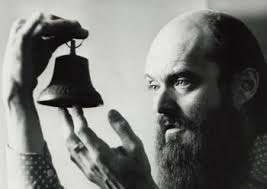
Vicenza Jazz Festival 2009 - Jan Garbarek & Hilliard Ensemble "Officium" by Arvo Part


Imagine a centuries old Francescan Monastery in downtown Vicenza with a nearby Gothic cathedral, a sort-of peceful island in the busy modernity, full packed for the event of the year, music and spirituality, modern and ancient.

Padre Celso, the Dom, elder friar, introduced the concert to the several people in the church, where in his words, the spirituality and misticism of Arvo Part's masterpiece where paramount vs. a concept of "religion" which is quite limited to the deepness of music and its effects on human soul.

After some minutes of crowd noises calming down, at last, the Tempio di San Lorenzo, that's the name of the place, voices began to spread in the huge reverberant space, coming in the Gregorian chant centuries old tradition, from the walking singers while reaching the shrine, elevated central space.

Jan Garbarek arrived with his "Reunion Blues" leather sax-bag, with two instruments: a tenor-sax and a saxello and he began, respectfully, to interact with heavenly voices of Hilliard's four angels...

Seeing all this happening at 4-5 meters from me made me someway embarassed: is it not too much, for me?!? Who am I to be sooo near to the core of things happening?

The text in latin, russian, english, is a long, long, yet far TOO brief moment, so various, full of chromatic and melodic changes... when the sax sounded a little bit inappropriate, suddenly the composer changed his music...

As Padre Celso explained, also the singers, for two times, during the "Officium" itself, the corpus of sacred words and music made for meditation and knowledge, are brought to ask for pity to the Lord, humbly... during the aria: "Most Holy Mother of God Save Us", the interwoving of three of the four voices resulted in shivers and mind-boggling for yours truly... the simple voices in the huge church resulted so... so... unique, awesome, moving...

Shortly after, always 3/4 of Hilliard's made something... in an angular, Perotinus-like vocal bliss, Jan Garbarek's began a slow boogie-woogie, cool bluesy riff, which, to anyone surprise, was so elegant and proper... surprising thinking that what was modern in 12th century may be still modern these days, blending with absolutely "wrong", modern music, flawlessly.

After a time which, no surprise, flowed like a fluid, as they arrived, the four singers exited... their voices coming from mid and back of the Cathedral where reminding me of Harmonic Chanting, as coming from Tibetan Gyuto monks from Tibet... this surprised me, as one more time, I discovered, must say re-discovered something I was already aware of... it's one world and no boundaries, in music and culture REALLY exists.

That's plain true... thus my hint is: keep your eyes on ECM's concerts schedule to find the Garbarek and Hilliard on Arvo Part's music nearest to you.

A great concert, an experience... again beyond definitions: is it classic, is it avantgarde or ancient, Gregorian music or is it jazz? Who care... it sure is Music and one of the very best concerts of my whole life.

Thanks to Padre Celso, Riccardo Brazzale, Franca and Pippo.

Thanks also to Roberto Cifarelli, as I linked here below to his superb pixes and site:

Officium pixes

Saturday, May 9, 2009

A new Desert Island Record: The Chitinous Ensemble directed by Paul Buckmaster


I owned this very elusive disc in cassette and open-reel 9 i.p.s./2 tracks formats for most of my (musical) life - the record dates back to 1971 - and only recently I found a copy, a nice copy on Deram label - Made in England, a truly gorgeous pressing.

Well, must say I wasn't prepared to the enjoyment I experienced this afternoon, when I had a listen, a careful, loving listening to the vinyl, at last.

It's music I've really been exposed to for decades, it's part of myself, BUT, nonetheless, the legendary Decca's recording quality made the miracle I discovered literally WORLDS of never heard sounds, the music passed at a completely different level of perception than other lesser medias, period.

The disc is simply AMAZING: Ian Carr's trumpet shines, while orchestra and prog-jazz musicians who recorded in three days - imagine they were well rehearsed - the masterpiece are in seldom heard league.


... not a cheap disc... BUT, folks, it's worth every sum, believe me.

For anyone interested in classic British jazz and prog-jazz, I listed some records I own and which recently listened to with great pleasure... consider them a sort of compendium to The Chitinous Ensemble (I'm listening to it right now...), an enlarged memory soundtrack to those magical early '70s, where all happened.

McLaughlin, Holland, Stu Martin, Surman - Where Fortune Smiles (Dawn)
Michael Gibbs - Just Ahead (Polydor 2lps)
Mike Westbrook - Love Songs (Deram)
McLaughlin/Okley/Surman - Extrapolation (Immediate)
Mike Westbrook - Marching Song Vol. 1 e 2 (Deram)
Michael Gibbs - Tanglewood '63 (Deram)
Michael Gibbs - First (Deram)
Keith Tippett's Centipede - Septober Energy (RCA 2lps)
Mike Westbrook - London Bridge is Broken Down (Venture/Virgin 3 LPS)
Ian Carr - Belladonna (Vertigo)
Norma Winstone - Edge of Time (Argo)
Keith Tippett/Marc Charig- Pipedream (Ogun)
Coxhill/Miller-Miller/Coxhill (Caroline)
Mike Westbrook - Metropolis (RCA)
Surman/Oxley/Skidmore - S.O.S. (Ogun)
Michael Garrick - Troppo (Deram)
Keith Tippett - Blueprint (RCA)
John Surman - Morning Glory (Island)
Hugh Hopper - 1984 (CBS)
Robert Wyatt - Ruth is Stranger than Richard (Virgin)
The Chitinous Ensemble (Deram)
Elton Dean (CBS)
John Surman - Westering Home (Island)
Robert Wyatt - Rock Bottom (Virgin)
John Surman - Tales of Algonquin (Deram)

You can't be wrong on the above... Enjoy!


Vicenza Jazz Festival 2009 - John Zorn & Uri Caine


Wikipedia on John Zorn


... yesterday evening, the first evening of 2009 edition of Vicenza Jazz Festival... a cool beginning beyond the thresholds of standards and jazz... the great, great John Zorn, born Sept. 2nd 1953, seems a rapper, younger than ever, never tired of his decades-long musical career, his Tzadik record label, Masada Acoustic and Electric projects exploring his Jewish roots, the recent projects with fellow Newyorkers Laurie Anderson and Lou Reed... a true volcano.

Uri Caine, beside being a very nice piano player, sounds sometimes second-listen, echoing some Jarrett/De Hartman/Tsabropoulos' Gurdjieff's hinted melodies alternating stormy piano sonic wrecks with mid-eastern flavoured melodies...

John Zorn's solo on alto sax - simply said, on a class itself - pays hommage to the noblest tradition of solo sax explorations of Ornette Coleman, Lol Coxhill, Evan Parker, and Anthony Braxton (the greatest of all, as John said during a too short conversation, after the concert...) hinting to whales, penguins and, broadening comparison, birds singing, snorting, puffing, farting, whistling, scaling, overtoning, playing in a sonic Picasso's version of (free) jazz, Terry Riley and LaMonte Young and Steve Reich in the shadow of timeless Teatro Olimpico's landscape, so misterious and appropriate to this weird music, with their blessing spirits...

The duo with Uri Caine, finally presented as a third, duo-act, after solos, showed a Zorn's Masada project-related revisitation... interesting, pleasing... but so much more normal than the sax-solo performance, quite rare and unseen & unheard by definition, left myself and others, still mouth-watering and missing the Zorn's previous stellar performance... beyond the limits of music and sound... to the VERY limits of the instrument itself.

... on next Sunday May 10th, Jan Garbarek and Hilliard Ensemble playing Arvo Part "Officium"...

Thanks to Riccardo Brazzale for the GREAT music program. Bravo and braveheart;-)

Wednesday, May 6, 2009

Choosing & listening to a record: how it happens? An hint...


Yesterday evening I was listening to some old Krautrock classics: Can - Tago Mago, Ash Ra Temple - Join Inn, Amon Duul - Disaster and I had the crystal clear, intense feeling in "KNOWING" what was the mind process in choosing RIGHT THESE DISCS...

When I was listening to Klaus Schulze's Moog on Ash Ra Temple's disc, I had a strong, "primitive", "natural" wish - as opposed to "I see a disc on a shelf and I pick it up for a listen" by chance - to listen to Damo Suzuki's voice in Tago Mago... then, again a primitive thought... hey, then I'll have a listen to that old, crazy double Amon Duul's disc, the one with concrete lettering on the cover (Disaster).

During this SOOOO pleasant, freaky - very private listening session... i.e. - jumping in the Music Room, playing an invisible guitar à la Jimi Hendrix at Woodstock... after calming down... I had a further speculation on this... is it possible, I guess, that many times, when both purchasing and listening to Music, we are following a path, better still, we are refreshing, confirming, matching the music which is ALREADY stored in our: brain, mind, soul, heart... choose the best match for you...

If I stop myself and concentrate on some high quality listening in my discs- collection, it REALLY represents an extraordinary, necessary and extremely valuable support for my true, very ME... an emanation, a prosecution of myself, an external hard-disk of life-friendly soundtracks, a mind-library... that's POSSIBLY the VERY "why" we're never tired in expanding our music discotheque... 'cause as living our life we're never tired in learning, broadening our knowledges, meeting new people, it's simply "natural" to continuing collecting, beginning new interests, re-discovering old neglected... one of best points in music collecting and music tout-court is in listening a record you forgot to own... only the touching the cover among other discs makes mind boggling, with a lot of remembrance from the past.

So, I argue... the listening process is a matching affaire with the ideal music the VERY ourselves know it's best for their - let's name this - health... music is already stored in ourselves from the past generations or, who knows, still more misteriously, as Makoto Kawabata says - he's a japanese musician, an improviser who claims he's an antenna - for the Music always and ALREADY here and coming from somewhere... maybe from... the Outer Space!!!

... sounds like the expression "Food for Thought" isn't so far from reality, don't you?!?

Tuesday, May 5, 2009

Tears of Joy


Tears and Music... a topic which intrigues me a lot... I already wrote something in my native language on the matter, but, as I freshly experienced it, aehm... 'twas yesterday evening, indeed... - here I am again.

What happens is in human nature, I guess... a piece in minor-key, usually hints for commotion, having an utterly moving character per se...

Yesterday I put on the platter of the Shindo 301 a disc which is in my disc-library since early '70s: Karl Richter playing the 16th century organ of Jaegerstadt Kirche in Copenhagen... a Deutsche Gramophone old tulip label recorded almost 50 years ago, where the old organ, noisy and breathing like a gentle giant;-) touches the soul only with its sound... but if J.S. Bach's "Canzona in D minor BWV 588" is played... well, the only thing which makes sense is... sighing, shamelessly!

Really, words are not able to describe the beauty, the immense beauty hinted... the lines, 4-5 voices are interwoving and following each other, always changing, always new to the ears and soul.

Subbass is like God's voice, mid and highs are angels... really, if I think to something religious, mystic, I cannot stop thinking to this superb piece, silently humming it in my head.

... and prayers aren't for such a deep, yet light and moving at the same, mysticism in music... prayers are for the fearsome, and no fears is felt when grooving in J.S.'s fractal immensity... life is too short but soooo beautiful and what we can do is living, nothing more, nothing less... like words cannot describe the very private sensations this very music gives to me, nonetheless, let me say... I listened to this very organ masterpiece in the dark, in my music room: at the very beginning, only the triodes blueish glowing were apparent in the warm, cocooning dimmed light... then, also smaller tubes and some reflections on my wife glassewares on the shelves and on the large horns became apparent... what I felt for a long moment was I looked at my very personal sky, with stars and stars and again stars shining...

... that was the moment I experienced shivers on my arms and legs and... tears erupted from my eyes... tears of joy.

Saturday, May 2, 2009

WJAAS - A & E Technical Research closed... a sad moment and an audiophile loss!


 弊社では、1972年に日本で最初のDCパワーアンプを発売して以来、位相特性、延滞特性など、時間軸に対する認識の重要性を発表し、精細な音楽信号をいかに忠実に再現するかを追求してまいりました。その間、1975年には直流ドリフトの面で不可能といわれたプリアンプも、特殊な変調方式を使ったチョッパーアンプを用いることにより実用化し、その後、イコライザ、チャンネルデバイダ、D/Aコンバータ、ラインセレクタ、さらにスピーカーに至るまで、トータルな製品群を一品一品手作りにより今日まで提供してまいりました。
 しかしながら、近年のIC技術の発展よる低価格オーディオ製品の台頭、ご利用者世代の交代、趣味や生活環境の変化といった要因が伴い、DCアンプの先駆者として、音楽を鑑賞するという至福の時間を過ごして頂きたいが為に提供してまいりました弊社のオーディオ製品郡の担った役割は終えたものと判じました。
 よって、弊社のオーディオ製品一切の、修理も含む取り扱いを停止させて頂きます。
 今尚ご利用頂いております皆様には、多大なご迷惑をおかけ致しますが、なにとぞご容赦頂けますようよろしくお願いいたします。
 皆様、長年ご愛用頂きまして、誠にありがとうございました。

2008年5月20日
エーアンドイー テクニカルリサーチ
代表  竹上 寛之

Musings - just in case...


The Ears for Tomorrow?

Farcical Laboratories Sonic Blinders


Reg. Price: $995.00
Sale Price: $599.95
Save: $395.05


Farcical Laboratories Sonic Blinders - this unique device enhances and controls your sonic reception avoiding interruption during your favorite musical passage (such as an aggravated spouse or whining child). Great for those late night listening sessions when you don't want to wake your neighbor (or listen in on them). No batteries required. Made from Space-Age Palintonic Synthetics. Order now and receive a complementary box of Q-tips. Lightweight and Portable. Available in Medium, Large or Ridiculous sizes.

Caution: Avoid use during windy conditions.


Thanks to Dietmar Hampel for sharing this.

See you in Berlin, Dietmar;-)

Friday, May 1, 2009

The secret unveiled: Roman Bessnow's DPoLS, speakers Imbedded Macro Positioning and playback in-wide-phase to room or the Quest for AEZ;-)


I consider the reading of some essay Roman Bessnow wrote in his Romy the Cat/GoodSoundClub forum to be among the best speculations ever written on audio and music reproduction, period.
That's possibily due to the mix of new and old world personal history, heritage, culture, skills and habits... but, well, what Roman did was far, FAR away and deeper than the usually empty hype-oriented typical audio chatting available everywhere... his hinting toward an ideal goal in musical enjoyment is nor crytpic neither snobbish, but, IMO, sincerely aimed to promote such an apparently difficult task: the better possible sound AND musical involvement and enjoyment while listening, BETTER, while experiencing Music at home...
I carefully read, digested and mumbled around several pages of his superb forum, where he passionately spend zillions world in trying to distillate a concept which is - very Zen-like - understandable in full ONLY if experienced, at least, one time in the life;-)
Very, very simplified, the practice of moving speakers around in the music-room, searching, as also a mainstream audio-guru - David Wilson of WAMM, WATT and Puppy's fame - suggests, calling it "Zone of Neutrality" or the location where the speakers interact less with the boundaries of the room... Roman calls this "Zone of Maximum Partiality", when acoustic system is organically imbedded into the imperfections of the room itself, taking advantage of the imperfections, thus converting these into advantages.
While mr. Wilson is afraid of room boundaries and feels there are "better rooms", Roman didn't think there are "bad rooms"...
Wilson looks for a neutral zone outside of which a room booms... Roman seeks for the boomiest zone outside of which... nothing happens.
While, always going ahead in DW vs. RB opinions, DW sweet-spot is about 3 inches sized, RB's is, with same speakers and careful set-up, a walkable space... and so and so on...
The above apparently obscure different, contrastating opinions bring us to a clearer place... please read further...
The above mentioned relatively-wide bandwidth "agilest" spot (the walkable space) in your room, will not be a spot but rather a quite large space.
It's very difficult to make a generalization about its size, but generally this quite "large bloomy space" would be a space equal to something between 1/8 and 1/12th of the room dimensions.
Roman (as myself - it's time to discover my own feeling) calls this large bloomy space as "Acoustical Erogenous Zone" (AEZ) of our listening room and obtains it moving the spakers, one at a time, where the 80hz to 500hz, the "Melody Range" driver/speaker, being AEZ-linked to room, gains its maximum potential "in" the room and "with" the room.
It's something not subtle and much cheaper than any gears swapping you can imagine! The speakers must be "inside" the AEZ: this way our artificial room-transducers (speakers) are in-phase with the very nature and essence - i.e. size, materials, pro & con - of the music room and then on, they do not work against each other.
Roman insists that if our "Melody Range" channels/ways (or a live instrument, as well...) are in AEZ, then they are capable of truly WONDERFUL things by "TURNING THE ENTIRE ROOM ON" - i.e. you cannot accomplish it with better speakers or better amps.
Diving in dangerous, yet pleasant territories, Roman says that driving our room with loudspeakers from "outside" AEZ location, is like pleasing different parts of a female body - it gives positive and effective atomic (meaning individual, isolated) effects to her gratification. However, only performing ALL necessary "actions" on women fabled;-) G-spot, some (lucky) woman will reach not atomic, BUT a FULL BODY REACTION.
The Melody Range lodging a room from AEZ is much more akin in hitting the G-spot of our music/listening room and allows us to get a VERY different and evolved result of the room loading, that's simply unimaginable if you drive same room "outside" of AEZ!

So, beside some difficulties in making an acceptable synopsis of Roman's stream of consciousness, that's plainly said, what I obtained in my humble 25 sq. metres music/listening room: the sensation of listening to a Musical Room, not speakers in a room to accomplish aesthetics or easy living or WAF... friends which listened to my elucubrations about "walking among musicians", "looking at the bottom of the violinist", the "speakers disappearing" and the "huge, organized time/music bubble, respecting instruments and voices recorded sizes and informations", and last but not least, the lysergic mass of "organized details", interwoving each other, without overdistracting or loosing the moving qualities of musical message... well, they had to experience with their own ears and senses to understand and believe me.
This is DPoLS, in glorious "Gotorama" and analog full-bloom, the best possible sound in a given room... that's what I'm grooving-in since some months ago, when I possibly - sort-of - sold my soul to the Devil or something... or, maybe, it was I dreamed and followed this ideal of sonic aesthetics I wasn't aware of... a beauty including quality and enjoyment, where the several complications involved in musical reproduction at home is ONLY a medium, so not paramount per se, like top musicians do not shows pain or stress also in most difficult playing, instead only giving "Music" to the listener. Simple, isn't it?!?!

Thanks Roman... myself and, as I hope, many others, owe to you A LOT... for teaching with simple words and hinting a path with an out-of-the-choir cristal-clear voice.

... like in '50s B-movie: "Romy vs. the Morons", Music by Miklos Rozsa;-)))))))))

Wednesday, April 29, 2009

WJAAS' related: traditional Ryokan hosting in Japan - i.e. tasting real Japan


Japanese Ryokan hosting/1

Japanese Ryokan hosting/2

Something to try, also if, sometimes, complimentary kimonos are a little bit downsized for Westerners;-)))

... next September, Japan: I'm coming!

Tuesday, April 28, 2009

A trip to Athens' (2/2) or the Endless Quest for Musical Enjoyment


On my way from Athen's brand new international airport, my friend Georges brought me to visit Dimitris Rapakosius' luthiery workshop... this young, passionate artisan, builds in downtown Athens among the finest ouds, saz and other stringed traditional instruments, having - among others - customers like David Lindley and Ross Daly.

Dimitris opened his dusty, yet lively and busy, no frills workshop and after some chatting, the three Iraqui and Turkish's traditions ouds he had handy began to spread their ancient voices... my primitive playing wasn't on same par than Dimitris, much more fluid and various than mine - hey, I'm a guitar player;-))) - but nonetheless, after some different tuning troubles, my fingers and myself, relaxed enough to give some enjoyment to listeners in the room.

The Engeleman and German spruce tops, the multi-coloured rounded backs, the pegs, the sound, so powerful and delicate, all hinted of a careful workmanship and care for details and customers wishes, also the fanciest (mother-of-pearl inlays...).

Well folks, we planned to begin with a careful restoring of my old, battered Moroccan oud as the entree... a new top in German spruce, new peg-box and pegs to reach a long-gone playability I tasted in Dimitris' fine instruments.

Can't stand in my shoes waiting for the restoring to be completed.

... ahhh, almost forgetting: Dimitris is left-handed... so he plays Jimi Hendrix' style - i.e. - in his case, oud stringed for right-handed, but as a lefty... amazing guy!

When did you last heard a nose breathing...


... in a disk through your music system?
It's not - maybe - music, BUT sure it improves trueness and sense of "being there", as music was played and recorded... a true masterpiece, vocals, a double-bass to-die-for and crazy details and enjoyment a go-go. Where?
Try ECM's Marc Sinan & Julia Hulsmann "Fasil", folks... great, GREAT music... yes, OK... you'll owe a coffee to me... not a problem: next time.

A trip to Athens' (1/2) or the Endless Quest for Musical Enjoyment


Athens, Greece...land and cocoon of philosophers and free thinkers, the bridge, the bearing - I'd dare - between Middle East and Europe, culturally, so also musically... but also, and that intrigues me a lot, the New Territory of braveheart audio experimenters music and audio lovers, people attending to symphonic music quite often, not blah-blah guys... but people leaving their own experiences and talking about them.
In my too brief, recent visit to Athens, mostly aimed to finally meet - after years of mails and phone-calls, my dear friend Georges in person, flesh & bones, and, last but not least, to listen to his one-of-a-kind horn system, I had the rare opportunity to enter, red carpet, the Athens' audio community... extremely nice and friendly people, first rate DIYers came from several places to meet, say hello and have a chat.
... and the chatting have been first class, indeed.
The partying involved in meeting at Georges' place was great, pals: surprising the (almost) tuned large system allowed a dozen people crowd to freely have a conversation with music still intelligible and pleasant, not wall paper music... proving that Imay-san of Audio Tekne's fame was SOOOO right, when in an old essay he wrote years ago about music listening at home: "If you feel pain and you can't have a relaxed chat with friends on same sofa, there something wrong in your music system."
The IVIE-IE-30 showed a 78 to 96-98 db peaks from speakers with a noise floor of 53-55db and we had a truly good time, still enjoying music while chatting.
A superb dinner at "da Claudio", an italian restaurant nearby - great food, not tourists stuffs - closed, few hours from my arrival, a memorable day.
The day after... the fine tuning!
Georges allowed and praised for my support and hauling hands and discerning ears, so we sported a very wise approach to improve sound coming from the mighty EMT 927, from Hiraga 20W on 416-8B's large bass baffles with Sony active x-over 24 db/oct. cut-off at 225 hz and Giovanni Riccardi's transformers coupled WE 300B based monoblocks with passive, autoformers based x-overs to RCA 9584 on mid-low, Altec 288-16G on mid-high and Coral H-104 tweeters... I "opened" the speakers, angled a little bit, throwed away absorbing panels which where taming the dipole baffles, raised mid-high horn and used some absorbing panels on floor near mid-low horn mouth which solved a frequency bump visible on IE-30 real-time analyzer... and music flowed like the first day... ONLY BETTER!;-)... much better, and not only my opinion!
More focused, MUCH more natural mid and high and better bass, BUT without any boomyness, with a superb soundstage and details to-die-for.
Yes, quite naive in approach, we mixed IVIE and B&K mike with poetry books;-) to raise horns, waiting for better and sturdier wooden supports, but the results left, both Georges and myself, quite satisfied for a 120 percent cheap fine-tuning session, proving that room placement, that exotic seek for DPoLS' nirvana - i.e. the best sound a room and a speaker and audio combo may reach.
Yes... cables, tweaks and the whole audiophile toys plethora has their weight but taking our time to move around speakers, to find proper volume settings... that's truly important... paramount.
Early that same day afternoon, we met Manolis at his home, where other friends soon enjoyed... and, Holy Shit!!!!
I wasn't prepared to the great, awesome bass horn, about 3 meters high, we had the opportunity to listen to!
Manolis did a great job, designing, measuring, optimizing and building a 40 hz horn using a JBL 15 inchers in a sealed chamber... the whole system is DIY-made, also the El Cheapo DVD/Disk player has been heavily modded... it's still a work in progress, so some inevitable flaws - i.e. - a focus and highs shyness is quite present, BUT the great foundation the bass-horn gives to music is a very solid point to begin with... every record sounded so easy and pleasant and relaxed you could listen to it for hours without pain or listening fatigue.
The grand piano in Manolis' music-room said a lot about his and his wife Masha's love for music and I see and look forward in the very near future a stellar quality music system blossoming from that weird looking audio combo.
... so more chatting... some ouzo on a sea-terrace, and later more listening and chatting again...
The third day, in the morning, we simply, so utterly naturally, had the confirmation of the beautiful, relaxed aequilibrium me and Georges created few hours earlier... also Anne Sophie von Mutter's violin on sometimes clinical Deutsche Gramophone's sounded so nicely we really didn't feel any wish to touch anything... Satori in Athens?
I wish to thanks my Greek friends: Georges for being the gentleman he is, for his exquisite hosting and brotherly friendship, Kostas, George, Manolis, Kostas, Lia, Sofia, Masha, Lorenzo, Dimitris (mo' later...) and all other new friends who joyned us in our music/audio tasting, to the sunny city of Athens and to its beautiful women and fine food and wine.
... some musings, to finish?
"To pedi me to papi" = "Pizza-delivery boys on mopeds" in Athens.
;-)

Sunday, April 19, 2009

WJAAS - Tanizaki-san lesson - "In Praise of Shadows" or use your ears like your eyes...


Junichiro Tanizaki (1886-1965) - written also: Jun'ichiro


Japanese novelist who dealt with the influence of the West on the old cultural heritage of his native country. After publishing novels written in a fairly orthodox style, Tanizaki fused traditional Japanese storytelling and experimental narrative. He emphasized the fabrication as the basis for fiction, stating that in both his reading and his writing he was "uninterested in anything but lies."

"I read somewhere the other day that men who are too fond of the ladies when they're young generally turn into antique-collectors when they get old. Tea sets and paintings take the place of sex." (from Some Prefer Nettles, 1928)

Junichiro Tanizaki was born in Nihombashi, in the commercial district near Tokyo Bay. His family owned a printing press, founded by Tanizaki's grandfather near the rice merchants' quarter. "Grandfather was very fond of me, his last grandchild; and sometimes in later years I suddenly felt I could hear his voice calling my name – "Jun'ichi, Jun'ichi," as he had during my earliest years, while he was still alive. A much-enlarged photograph of him was always prominently displayed in our house, so I got to know his face well, and could call it to mind and so encounter Grandfather whenever I wished." Aften falling on hard times Tanizaki's family had lost much of its former wealth. Tanizaki worshiped his mother who breast-fed him until he was 6. Despite financial problems, his parents pampered him and took him to countless theatrical performances, which early gave birth to the author's passion for drama and the traditional Japanese arts.

Tanizaki's studies at the university of Tokyo ended in 1910 in shortage of money - or according to some sources his nonpayment of fees was an act of rebellion. At the age of 24 he published one of his best short stories, 'The Tattooer', which show influence of Edgar Allan Poe, Oscar Wilde and the French Decadents. Wilde's Portrait of Dorian Gray Tanizaki also translated. In the story the character of a young woman starts to change when she has taken a tattoo. When in Wilde's novel the painting displays the decay of the subject, in Tanizaki's tale the artist's design is the cause of the woman transformation. The theme of feminine beauty and moral integrity marked his following stories, among then 'Whirlpool' in which an evil woman poses as a Buddhist saint for an artist's drawing.

--...Standing aside, he studied the enormous female spider tattooed on the girl's back, and as he gazed it, he realized that in this work he had expressed the essence of his whole life. Now that it was completed, the artist was aware of a great emptiness.
--'To give you beauty I have poured my whole soul into this tattoo,' Seikichi murmured. 'From now on there is not a woman in Japan to rival you! Never again will you know fear. All men, all men will be your victims...'
(from 'Tattoo')

The turning point in Tanizaki's life was the great earthquake in Tokyo region in 1923. His house in the fashionable residential area was leveled by the quake. Tanizaki left his wife and child and moved to the Osaka area which was much more old fashioned. There he stopped using Western models and started to take interest in traditional literature, especially the classical Japanese tale GENJI MONOGATARI (The Tale of Genji), which was written by Lady Murasaki Shikibu (c. 980-1030). Tanizaki'a first novel from this period, serialized in the mid-20's, was Naomi (trans. in English in 1985), in which a 28-year-old engineer, Joji, goes through his love affair with a young femme fatale, who is totally immersed into Western culture. "As Japan grows increasingly cosmopolitan, Japanese and foreigners are eagerly mingling with one another; all sorts of new doctrines and philosophies are being introduced; and both men and women are adopting up-to-date Western fashions. No doubt, the times being what they are, the sort of marital relationship that we've had, unheard of until now, will begin to turn up on all sides." (from Naomi) In TADE KUU MUSHI (Some Prefer Nettles, 1928-29) Tanizaki continued the theme of the clash between traditional values and modern culture and made Tokyo and Osaka symbols of the conflict. The protagonist, Kaname, considers himself a man of his time, but eventually abandons the modern world.

At the time of writing 'Professor Rado' (1925-28), an erotic story about an eccentric bachelor professor, Tanizaki's second marriage was ending. Her third wife, Matsuko, become again for the author a target of worship, as many other women in his life.

Tanizaki's years of immersion in Japanese history produced some of his finest works. The Secret History of the Lord of Musashi (1935) was set in the the 16th-century civil-war period. In the story Lady Kikyo set out to revenge the murder of her father and mutilation of his face. But the culprit is not her won husband, as she thinks, but her lover, the Lord of Mushashi, whose bizarre sexual obsession is behind the whole plot. Tanizaki's admiration for old Osaka is seen in SASAMEYUKI (The Makioka Sisters, 1943-48), a recreation of Osaka family life in the 1930s. The first chapters of the novel appeared during the World War II, but further publication was stopped by censorship of the military government. Tanizaki continued writing and published the first part at his own expense and delivered the copies to his friends. The second part appeared in 1947 and the third part was first printed in a serialized form in a magazine.

Although Tanizaki's used his own wife and her three sisters-in-law as models – and the author himself plays a small part in the middle of the story – it is not a roman à clef. Tanizaki wanted to record the vanishing cultural milieu of Osaka, its dialect, and the daily life of a middle-class family. The story is about four sisters, who are trying to find a suitable husband for Yukiko, the third sister. She is a woman of traditional belief and has rejected several suitors, and remains almost unmarried. Until Yukiko marries, Taeko, the youngest, the most Westernized, must wait for her turn according to the social convention.

His nostalgic love for the traditions and remnants of the past, even rustic and worn-out, Tanizaki expressed in the essay 'In Praise of Shadows' (1933-34). Tanizaki juxtaposed in it Western harsh light and the ''muddy'' Japanese complexion: ''I would call back at least for literature this world of shadows we are losing. In the mansion called literature I would have the eaves deep and the walls dark, I would push back into the shadows the things that come forward too clearly, I would strip away the useless decoration.''

Tanizaki's characters are often driven by obsessive erotic desires. His famous post-war novels include FUTEN ROJIN NIKKI (1962, Diary of a Mad Old Man), which depicts an aged diarist who is struck down by a stroke caused by an excess of sexual excitement. He records both his past desires and his current efforts to bribe his daughter-in-law to provide sexual favors in return for Western baubles. KAGI (1956, The Key) was a story of dying marriage examined through parallel diaries. "If now, for the first time, my diary becomes chiefly concerned with our sexual life, will she be able to resist the temptation? By nature she is furtive, fond of secrets, constantly holding back and pretending ignorance; worst of all, she regards that as feminine modesty. Even though I have several hiding places for the key to the locked drawer where I keep this book, such a woman may well have searched out all of them." The two protagonists start to use their diaries as a means of communication by tacitly agreeing to read each other's diaries while outwardly pretending that they do not. The diaries reveal their problems of understanding each other and separateness even during the shared activity of sexual union. The Key was adapted into screen by Kon Ichikawa in 1959, and later by Tinto Brass. In the short story 'The Thief' Tanizaki again studied the theme of fabrications and the truth. The narrator is a young student who is suspected of stealing from his comrades. "It also struck me that if even the most virtuous person has criminal tendencies, maybe I wasn't the only one who imagined the possibility of being a thief." Finally the protagonist admits his guilt but defends himself that he told the truth in a roundabout way.

Several of Tanizaki's stories have been made into films, in Japan and in other countries. He received the Imperial Prize in 1949 for The Makioka Sisters. Tanizaki lived his later years mostly in the Kansai, the area around Kyoto-Osaka-Kobe. He died in Yugawara, south of Tokyo, on July 30, 1965. His childhood memoirs appeared serially in a Japanese magazine in 1955-56, and were published in English in 1988.

For further reading: Tanizaki Jun'ichiro ron by Noguchi Takehiko (1973); The Moon in the Water: Understanding Tanizaki, Kawabata, and Mishima by Gwenn Boardman Petersen (1979); Visions of Desire: Tanizaki's Fictional Worlds by Ken K. Ito (1991); Three Modern Novelists: Soseki, Tanizaki, Kawabata by C. Van Gessel (1993); The Secret Window by Anthony Hood Chambers (1994); Tanizaki Jun'ichiro: Kitsune to mazohizumu by Chiba Shunji (1994) - Film adaptations: Oyu-sama, dir. by Kenji Mizouchi, 1951; Okuni to Gohei, dir. by Mikio Naruse, 1952, Akuto, dir. by Kaneto Shido, 1965

Selected works:

* SHISEI, 1910 - The Tattooer - Tatuoija - films: 2006, dir. by Hisayasu Sato; 2007, Shisei: ochita jorôgumo, dir. by Takahisa Zeze
* KAMI TO HITO TO NO AIDA, 1924
* CHIJIN NO AI, 1924 / NAOMI - A Fool's Love / Naomi (trans. by Anthony H. Chambers) - films: 1949, dir. by Keigo Kimura; 1960, dir. by Keigo Kimura; 1967, dir. by Yasuzo Masumura; 1980, Naomi, dir. by Yoichi Takabayashi
* KOJIN, 1926
* TADE KUU MUSHI, 1928 - Some Prefer Nettles (trans. by Edward G. Seidensticker) - Kukin makunsa mukaan (suom. Yrjö Kivimies, Edward G. Seidenstickerin englanninkielisen ja Sylvie Regnaut-Gatierin ja Kazuo Anzain ranskankielisen käännöksen pohjalta)
* MÕMOKU MONOGATARI, 1931 - Sokean miehen kertomus
* MANJI, 1931 - Quicksand (trans. by Howard Hibbitt) - films: 1964, dir. by Yasuzo Masumura, starring Ayako Wakao, Kyôko Kishida, Yusuke Kawazu, Eiji Funakoshi; 1983, dir. by Hiroto Yokoyama; 2006, dir. by Noboru Iguchi
* ASHIKARI, 1932 - Ashikari (in Ashikari and The story of Shunkin, tr. by Roy Humpherson and Hajime Okita) / The Reed Cutter and Captain Shigemoto's Mother: Two Novellas (tr. by Anthony H. Chambers) - film: Oyû-sama, 1951, dir.by Kenji Mizoguchi, starring Kinuyo Tanaka, Nobuko Otowa, Yuji Hori
* SHUNKINSHÕ, 1932
* IN'EI RAISAN, 1933-34 - In Praise of Shadows - Varjojen ylistys (suom. Jyrki Siukonen)
* BUNSHÕ TOKUHON, 1934 - A Style Reader
* BUSHUKO HIWA, 1935 - The Secret History of the Lord of Musashi; and Arrowroot (tr. by Anthony H. Chambers)
* NEKO TO SHOZO TO FUTARI ONNA, 1936 - A Cat, a Man and Two Women, 1990 (translated by Paul McCarthy) - film 1956, dir. by Shirô Toyoda
* SASAMEYUKI, 1943-48 - The Makioka Sisters (tr. by Edward G. Seidensticker) - Makiokan sisarukset (suom. Kai Nieminen) - films: 1950, dir. by Yutaka Abe; 1983, dir. by Kon Ichikawa, starring Keiko Kishi, Yoshiko Sakuma, Sayuri Yoshinaga, Yûko Kotegawa
* RANGIKU MONOGATARI, 1949
* SHÕSÕ SHIGEMOTO NO HAHA, 1949-50 - The Cutter and Captain Shigemoto's Mother (trans. by Anthony H. Chambers)
* KAGI, 1956 - The Key (transl. by Howard Hibbett) - Avain (suom. suomentanut Tuomas Anhava, Howard Hibbetton englanninkielisestä käännöksestä) - films: 1959, dir. by Kon Ichikawa, starring Ganjiro Nakamura, Machiko Kyo, Junko Kano, Tatsuya Nakada; 1974, dir. by Tatsumi Kumashiro; 1983, La Chiave, dir. by Tinto Brass, starring Frank Finlay, Stefania Sandrelli, Franco Branciaroliv, Barbara Cupisti, Armando Marra, Maria Grazia Bon; 1997, dir. by Toshiharu Ikeda, starring Naomi Kawashima, Akira Emoto, Mikio Ôsawa
* YOSHO JIDAI, 1956 - Childhood Years: a Memoir (translated by Paul McCarthy)
* YUME NO UKIHASHI, 1959 - The Bridge of Dreams (trans. in Seven Japanese Tales) - Unien silta (suom. Kai Kaila)
* FUTEN ROJIN NIKKI, 1962 - Diary of an Old Man (tr. by Howard Hibbett) - films: 1962, dir. by Keigo Kimura; 1987, Dagboek van een oude dwaas, dir. by Lili Rademakers, starring Ralph Michael, Beatie Edney, Suzanne Flon
* Seven Japanese Tales, 1963 (tr. by Howard Hibbett)

... the above will sure interest anyone aiming to better understand Japan and the love of Japanese for ALL senses: taste, smelling, tact, hearing AND seeing... but while Western culture (mostly) privileged seeing and its declinations, Japan and Japanese weren't and aren't shy nor fearful in giving same dignity to other senses... a great, GREAT lesson!

Friday, April 17, 2009

Record Store Day 2009 - it's tomorrow, April 18th 2009


Third edition of "Record Store Day"...

... yes, again and again, it's necessary, like book shops, records stores will continue their important role in music & culture spreading vs. cheaper'n'cheaper downloads world.

Maybe discs are out of fashion, outdated media, BUT for me and many others, the disc and disk pusher remains a lighthouse, a counselor, hinting for new music.

Let's support our local record-shops, pals... let's pay them a visit tomorrow, for a chat and some old-timey browsing in the bins and shelves. It's lively music searching, it's culture and good taste.