Hand-made in Cumbria by Roger Bucknall, luthier extraordinaire 💫 in 1995.


Roger Bucknall
💫
Roger Bucknall
💫
Better than owning /using a drum-machine and worth a life of improvisations on it 💫🎼💫🥇💫🎼
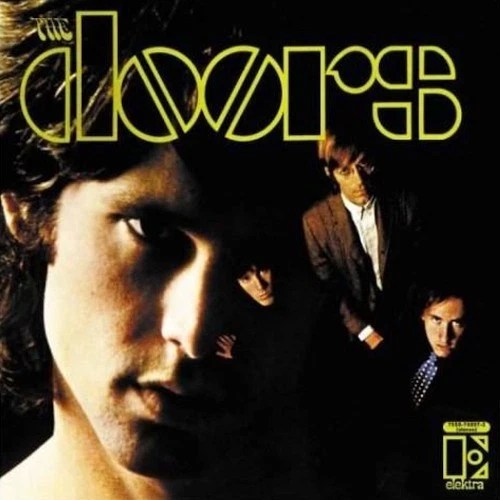
Japanese disk, only 🥇 produced by Henry Kaiser and John Zorn 💫


Still recovering from a bad flu with high fever up to 39,5C and assorted related paraphernalia (lysergic nightmares, etc.), I’m experiencing something truly annoying and disturbing: a frequencies-selective deafness 😱

Being stuck at home, I took a chance to change strings to some of my guitars and, to my surprise, the sound of my fine acoustic instruments is lacking harmonics and everything sounds flawed, lesser, leaner and thinner!
I turned on my home audio system and I found same feeling - i.e. - the perception of sound changed abruptly to a far-from-hi-end aural experience: low-end almost disappeared and high frequencies are sort-of exaggerated…
Both hi-end acoustic instruments and audio-system sounding like cheap, flea-market gears is something which would impress and worry anybody, also a painful lesson: Man first or we aren’t nothing without our senses and perceptions ✅
Sure the (temporary) deafness is related to the presence of mucus, a problem that any otolaryngologist would explain better than myself… yet, the weirdness of situation is due to the sense of gratitude of - at least - the actual memory of my quite remarkable hearing and listening skills and capabilities: being a self-proclaimed “twogoodears” sounds pretentious at best, these days 😊
I just hope to get back my sense of hearing, now clouded.
🍀
From Gryphon’s:
“We are devastated to announce that Frank Ford, the co-founder of Gryphon Stringed Instruments, passed away Sunday afternoon after a brief illness. He was loved by those who were fortunate to know him and work beside him and he was respected by those in the wider luthier community who benefited from his generous spirit. He will be missed.”
Mr. Ford was extremely kind and supportive with my humble me, also at a distance. His site - so lovingly kept and fed - was a luthiery goldmine and he was never tired to share his knowledge 🥇 - I’ll miss him a lot 💔

From the Wolke Verlag imprint, who've already brought us incredible books like Karl Berger's "The Music Mind Experience", "FMP Free Music Production - The Living Music", Peter Brötzmann's Along the Way, and George Lewis' "Composing While Black. Afrodiasporic New Music Today", to name only a few and a great many more - comes one of the most engrossing volumes we've encountered all year: Harry Vogt and Martina Seeber’s “Radio Cologne Sound The Studio for Electronic Music The WDR”. Revealing the complex and fascinating history of one of the earliest and most important dedicated electronic music studios in the world, comprising three central portraits of its important directors - Herbert Eimert, Karlheinz Stockhausen, and York Höller - as well as a wealth of material, including essays, pictures, personal memories and anecdotes, in addition to texts that shed light on the intense interplay between technology, aesthetics, and those who worked in and at the studio, across its 288 pages - soundtracked by an incredible X5 CD collection gathering many of the most important works recorded by composers like Karlheinz Stockhausen, Henri Pousseur, Thomas Kessler, Franco Evangelisti’, György Ligeti, Mauricio Kagel, Iannis Xenakis, John McGuire, and Luc Ferrari (to name only a few) - one of the most important discrete histories in the development of avant-garde and experimental electronic music over the course of the second half of the 20th century.
First conceived as the sonorous realization of modernism during the early decades of the 20th Century, the project of avant-garde music only fully hit its stride and entered the board of cultural conciseness during the post-war period, as technological advancement - the invention of magnetic tape, synthesisers, and every computers - facilitated the develop new creative methods and languages in the form of music concrete, electronic and electroacoustic music, as well as computer music. Subsequently, across the 1950s and 60s, electronic music studios sprang up in nearly every corner of the globe, unfurling radical new sounds from their walls that collectively amounted to global conversation striving for a more democratic, transnational, and creatively egalitarian image of the future through practices of sonic abstraction. Among the most important of these studios was Cologne's WDR Studio for Electronic Music, the subject of an incredible new book and X5 CD collection - “Radio Cologne Sound The Studio for Electronic Music The WDR” - written and edited by Harry Vogt and Martina Seeber, published by the Wolke Verlag imprint. Constructed around three central portraits of its important directors - Herbert Eimert, Karlheinz Stockhausen, and York Höller - throughout the volumes’ 288 pages, a remarkable world innovative creation unfolds, soundtracked by 28 tracks stretching across its accompanying five CDs - including important works by Stockhausen, Henri Pousseu, Iannis Xenakis, Luc Ferrari, John McGuire, and numerous others, recorded at the studio, that provide a crucial snapshot of its vital force in sound practice over more than half-a century. Published in English and German, it stands high among the most engrossing books on music we’re encountered this year. Highly recommended and not to be missed.
Founded in 1951, the WDR Studio for Electronic Music was among the earliest, if not the earliest studio in the world set to facilitate the creation of purely electronic music. Established by a group of the city’s leading figures in avant-garde music - Robert Beyer, an early advocate of timbre-oriented music; the physicist, phoneticist, synthesist, Werner Meyer Eppler, who was the first to coin the term electronic music in 1949; the technician Fritz Enkel; and the musicologist Herbert Eimert - the studio immediately made waves by issuing radical and groundbreaking sounds into the public sphere, and rapidly became a model for other similar studios that would soon be set up across Europe, Latin American, Asia, and the United States. Among the first works produced at the WDR Studio were Herbert Eimert's “Klangstudien I and II”, a revolutionary and important work in early post-war electronic music that set the stage for what would transpire at the studio over the coming decades. While notable for many of the important works the were created there alone - Karlheinz Stockhausen’s “Kontakt” and “Mikrophonie I & II”, Henri Pousseur’s “Lob des Langen Marsches”, Thomas Kessler’s “Dialoge”, Franco Evangelisti’s “Incontri di fasce sonore”, György Ligeti’s “Artikulation”, Mauricio Kagel’s “Transición I”, Iannis Xenakis’ “La Légende d’Eer”, John McGuire’s “Vanishing Points”, Luc Ferrari’s “Porte Ouverte sur Ville” - the studio’s importance traversed numerous important angles. Particularly within the German context, electronic music represented a fresh start within the context European classical music during the years immediately following the Second World War, the Nazi’s having appropriated and weaponized the music of composers like Bruckner, Beethoven, and Wagner. Not only did WDR dedicated a great amount of time and energy working with composers and teaching them how to use its equipment to facilitate that development of this new musical sense of possibility, but in addition to broadcasting programs of the music that was produced there, it also produced programs that endeavored to familiarize listeners with the methods and ideas that underscored it. In so doing, it became not only an axis of avant-garde electronic music in Germany, but also for the global scene.Throughout Harry Vogt and Martina Seeber’s fantastic new volume, Radio Cologne Sound The Studio for Electronic Music The WDR”, rare insights and narratives are unlocked and unfold around the remarkable happenings at the studio over the course of more than half a century. Constructed around three central portraits of its important directors - Herbert Eimert, Karlheinz Stockhausen, and York Höller, a wealth of material, including essays, pictures, personal memories and anecdotes, as well as texts that shed light on the intense interplay between technology and aesthetics, and the teamwork in the studio, presenting endlessly inspiring realities and enduringly relevant questions surrounding the place of electronic music today. Fittingly, as sound is at the center of the story, at the heart of “Radio Cologne Sound The Studio for Electronic Music The WDR” is a five CD collection comprising 28 of the most important works created at the studio between the 1950s and the turn of the new millennium by legendary composers like Karlheinz Stockhausen, Henri Pousseur, Thomas Kessler, Franco Evangelisti’, György Ligeti, Mauricio Kagel, Iannis Xenakis, John McGuire, Luc Ferrari, and a great many more, providing a crucial snapshot of its vital force in sound practice. 288 pages of illuminating revelations, Harry Vogt and Martina Seeber’s “Radio Cologne Sound The Studio for Electronic Music The WDR”, published by the Wolke Verlag imprint, is a tour de force that unlocks one of the most important discrete histories in the development of avant-garde and experimental electronic music over the course of the second half of the 20th century. Absolutely fantastic and essential for anyone interested in electronic and electroacoustic music.

CD 1
1 Heinz Schütz Morgenröte (1952) 2 Karel Goeyvaerts Compositie Nr.5 met zuivere tonen (1953) 3 Gottfried Michael Koenig Klangfiguren I (1955) 4 Giselher Klebe Interferenzen (1955) 5 Karlheinz Stockhausen Gesang der Jünglinge (1955–56) 6 Franco Evangelisti Incontri di fasce sonore (1957) 7 György Ligeti Artikulation (1958) 8 Herbert Brün Anepigraphe (1958) 9 Mauricio Kagel Transición I (1958–59) 10 Herbert Eimert Epitaph für Aikichi Kuboyama (1960–62)
CD 2
1 Johannes Fritsch Fabula rasa (1964) 2 Michael von Biel Fassung (1964) 3 Karlheinz Stockhausen Mikrophonie II(1965) 4 Peter Eötvös Mese (1968) 5 Mesías Maiguashca Hör zu (1969)
CD 3
1 Nicolaus A. Huber Aion (1968/72) 2 Henri Pousseur Lob des Langen Marsches (1972–73) 3 Winfried Jentzsch Cellomusik (1972/74) 4 Rolf Gehlhaar Fünf deutsche Tänze (1975) 5 Thomas Kessler Dialoge (1977)
CD 4
1 Iannis Xenakis La Légende d’Eer (1977–78) 2 York Höller Schwarze Halbinseln (1982) 3 Michael Obst Chansons (1986) 4 John McGuire Vanishing Points (1988)
CD 5
1 Youngi Pagh-Paan Tsi-Shin-Kut (1991/1994) 2 Jonathan Harvey One Evening… (1993–94) 3 Luc Ferrari Porte Ouverte sur Ville (1994) 4 Marco Stroppa Zwielicht(1994–99)
 | ||
Happy birthday, good health and wealth to the genius and the common self-made man, the king of Americana, the poet, the unique, one-and-only Tom Waits 🥂

As the owner of Piers’ Volume I, cannot miss quoting the issue of volume II
🥇🥂🔝🥂
SONGS I LOVE VOLUME II
Out now via Bandcamp (link in bio)
I wanted to make a really beautiful object for this new Songs I love album and I couldn’t be happier with how it’s come together. Can’t wait for you to get your hands on it too. In the 10 years that my label @beatingdrumrec has been going, as those of you who follow us know, our objective as a small and proud indie boutique label has been to produce beautiful and collectible releases. In the book, I write about each song that I’ve chosen to cover and I made a portrait artwork for each one too. I also have some wonderful singers and musicians accompanying me on this project as you can see below. Tomorrow it will be available on all digital platforms, for those of you who love a beautiful object , head over to our bandcamp page and we’ll send it out to you!


Road (Nick Drake)
Between the Bars (Elliot Smith)
Caloubadia ft. @orianelacaille (Alain Peters)
For the Turnstiles (Neil Young)
Horses in My Dreams (PJ Harvey)
Bella ci Dormi ft. @mauro.durante.cgs (Trad)
Voodoo Child (Jimi Hendrix)
Zahit Bizi Tan Eyleme ft. @kazazcan (Trad)
With Kitty I ll go (Trad)
Little Green ft. @guybuttery / guitar (Joni Mitchell)
Sunette d’Amore (Trad)
The Snows They Melt the Soonest ft. @nibsvanderspuy (Trad)
There’s a Man Going Round Taking Names (Trad) ft. @dawnlandes & @sylvielewis
Nottamun Town ft. @jennylysander (Trad)
My heart Is In the Highlands ft. @gregorydargent (Arvo Pärt)
Limited edition book & album. Hardback, clothbound, 84 pages with text & illustrations by Piers Faccini. Exclusive 15-track CD included in the book + high-quality download and streaming via Bandcamp
The album drops at midnight on all streaming services
📸 @iammrcup