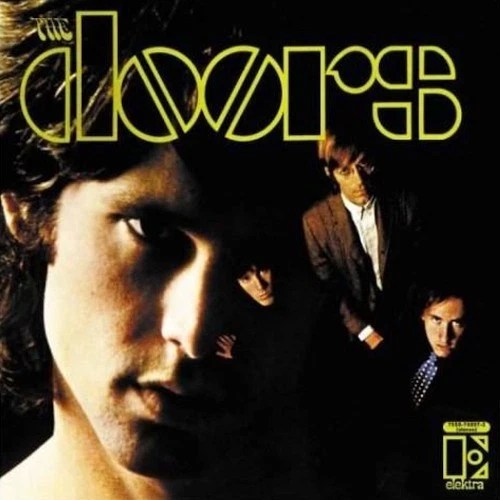
The grin 😏🤭😏

A sought-after and superb 55 years old disc, almost impossible to find in M/M conditions 🥂
💫
This is Stefano Bertoncello's Blog (ステファノ・ベルトンチェッロ - トゥーグッドイアーズ − ブロガー、オーディオ&ミュージック・コンサルタント) devoted to pacific topics like Music - live and reproduced - i.e. discs, audio, guitars and whatever musical: concerts, workshops, exhibitions, etc. Furthermore: travelling - as a mind-game and real globetrotting - and books, movies, photography... sharing all the above and everything which makes Life better and Earth a better place to stay, enjoying Life, in Peace. Proudly ads-free since 2007! Enjoy.💫
A sought-after and superb 55 years old disc, almost impossible to find in M/M conditions 🥂
💫
Lost Beatles Audition Tape With “Unreal” Sound Quality Found After 60 Years


A reel-to-reel tape collecting dust for decades in a Vancouver record shop has turned out to be one of the clearest-known recordings of The Beatles’ 1962 Decca audition — the moment before everything changed.
Rob Frith, owner of Neptoon Records, found the tape labeled “Beatles ’60s Demos.” Thinking it was just another bootleg, he eventually played it — and was stunned.
“It sounds like a master tape,” Frith said. “It’s as if the Beatles are right there in the room.”
Music preservationist Larry Hennessey confirmed that the tape contained white leader-tape strips between songs — a sign of a professional studio copy, not a fan-made bootleg. Experts now believe it’s a direct duplicate of the original Decca master, recorded on January 1, 1962, when the lineup still included Pete Best on drums. The band performed fifteen songs that day, hoping to impress Decca Records — who famously turned them down, saying “guitar groups are on the way out.”
Weeks later, of course, George Martin at Parlophone signed them, and the rest is history.
Only rough bootlegs of the Decca session had circulated for decades, but this reel’s fidelity is astonishing. Smithsonian described it as “like opening a sonic time capsule.”
The tape’s origins trace back to Jack Herschorn, a Vancouver music executive who received it from a London producer in the 1970s. He declined to release it, saying,
“I didn’t think it was moral — those guys deserved the royalties.”
In September 2025, Frith personally gifted the tape to Paul McCartney in Los Angeles, ensuring it’s now safely in the hands of one of the men who made it.
“People say it could be really valuable,” Frith said. “I don’t know. I’m just glad it’s preserved.”
The find offers an unprecedented window into The Beatles’ raw, pre-fame sound.
Out of curiosity, I throw a dice on this… would it be the # -n Steven Wilson’s remixes, I’d gladly declined, but this one’s different: no gimmicks, respectful and highlighting the Mark Charig’s trumpet, Keith Tippet’s piano and some hidden acoustic guitar phrases by Robert Fripp… and more.


The result is just like watching at a familiar landscape from a different P.o.V.
Still a nice one… and an intriguing listening experience.
💫
A pair of 1950s Klangfilm Bionor cinema speakers, power amplifiers, and hi-frequency horns from the collection and home of Florian Schneider of Kraftwerk. These two large speakers were a focal point of Florian’s living room and consist of two large mahogany horns which bolt to wooden Kl L 501 enclosures equipped with two Siemens Smf Lsp2a speakers. Comes with two KLV 408 power amplifiers and a pair of black 6 Kl L 303 hi frequency horns with crossovers. The power amps are equipped with a pair of EL34 tubes, one ECC83, and an EF40.


This lot is located in and will ship from Gardena, CA. Please reach out to bidding@juliensauctions.com with your postal code for a shipping estimate.
Dimensions: Horns (Largest): 60 x 37 x 22 inches each
Category: Instruments & Equipment
Provenance: PROVENANCE From the Estate of Florian Schneider
For a condition report, please emaillotinquiry@juliensauctions.com more than 48 hours before the auction
… at last!
Who is the mysterious man sitting next to the organ?
The history of this photograph.

According to the book Robert Wyatt: Wrong movements of Michael KING (1994), it is Winfried TRENKLER that we distinguish at the top right of the photo, hidden behind a pole. In the foreground the bare feet that exceed are those of Ingrid BLUM. Much more precise, Graham BENNETT's Soft Machine: Out-Bloody-Raegous (SAF Publishing Ltd, 2005, page 206) indicates that the photo was taken on April 4, 1970 in the apartment of the two journalists Winfried Trenkler and Ingrid Blum, followers, like many in the psychedelic era, of Optical Art to see the reproductions displayed on their walls. Winfried Trenkler will make a career on WDR 2, a fine progressive rock and electronic music specialist. The SOFT MACHINE make a break at home, they arrived in Cologne by plane for a concert at the Sporthalle as part of the Progressive Pop Festival'70. The SOFT MACHINES are slowly recovering from the stressful journey aboard a small plane that let the day and the air through the doorway and whose windows were frosted from the inside. The cabin of the cuckoo was not pressurized at all. Elton DEAN pulled out the severely bruised eardrums and had not yet recovered all of his hearing faculties when he went on stage.
Thus, those who for a long time were thought to be musicians photographed in a gentle moment of fraternal meditation are in fact sounded by their displacement in a cargo transport zinc, the one who carried their equipment. They collapsed in almost unknown, exhausted, deafened. They have just put on a few beers and a bottle of red wine to accompany a snack with no crumbs left in their little dessert plates, maybe a little omelette. They have a concert to be sure in the coming hours.
Thanks to Michael King 🙏
Some vintage ads and pictures from my archive 💫


It’s the second time I talk about this useful gizmo… I’m a fan of Fidelity Research (my AS-1 passive preamp is such a no-brainer winner and a keeper 💎🥇💎) and I love the building quality and look, but - as a BIG plus! - this little aluminum box is absolutely transparent and, owning three, I’m able to handle all the consumer recorders [no XLR, for the studio reel to reel machines, I use my trusty Lemo/Neutrik (all top quality Swiss-made, not recent China-made 💫) 10 IN/10 OUT selector] in every combination I need - i.e. - 2 x ReVox G36 (4 tracks and 2 tracks High Speed) and 2 x ReVox A77 (4 tracks and 2 tracks High Speed) and the Nakamichi 1000 ZXL.


💫
Baldassare Franceschini (1611-1689):
"An angel playing a cello".

Rudy Van Gelder (born November 2, 1924, in Jersey City) was the engineer who recorded over several thousand sessions for such artists as Booker Ervin, John Coltrane, Miles Davis, Thelonious Monk, Sonny Rollins, Art Blakey, Lee Morgan, Joe Henderson, Freddie Hubbard, Wayne Shorter, Horace Silver, Herbie Hancock, Grant Green, and George Benson. He worked with many different record companies, recording almost every session for Blue Note Records from 1953 to 1967.

Among the albums he recorded were "A Love Supreme," "Walkin'," "Maiden Voyage," "Saxophone Colossus," and "Song For My Father." He began in 1946 by recording local musicians in his free time, at his parents' house in Hackensack, in which a control room was built adjacent to the living room that served as the musicians' performing area.
A friend introduced him to Alfred Lion of Blue Note Records in 1953. In the 1950s, he performed engineering and mastering for classical label Vox Records. He became a full-time recording engineer in 1959, moving Van Gelder Studio to a larger purpose-built facility in Englewood Cliffs.

In the late 1990s, he worked as a recording engineer for some of the songs featured in the soundtracks for the Japanese anime series, "Cowboy Bebop." From 1999, he remastered the analog Blue Note recordings he had made several decades earlier into 24-bit digital recordings in its RVG Edition series. He died August 25, 2016, at his home in Englewood Cliffs.

(Photo: Rudy Van Gelder. Source: Creed Taylor Produced)