Search this Blog

Pageviews

Wednesday, April 8, 2009

WJAAS - Miyajima-san's headshell ring... an humble, great-little revelation


It's such an humble, unassuming, little item it didn't deserved an its own pix... have a look at the pictures of the Otono Edison Miyajima Labs Shilabe cartridge with its red jewel-box... lower pix, right-side... those golden little rings... well, you got it!
I mounted them, without not too much convintion, between Schick and Lumiere A, and I heard something, folks... had to try again with and without rings, so now I'm pretty sure I wasn't wrong... those three little spikes they're someway effective in giving a "polished-like" character to music, like looking through a cleaner window glass.
Must say that Miyajima-san isn't richer after designing, producing and selling this little accessory, BUT sure this tells more of his passion for music, care for down to the tiniest link of the audio chain and by every means, down to voodoo, in reaching a better degree of musical accuracy.
It's nothing short of a little treasure and a well-kept analog-audio secret...
P.S. - innocent jokes apart, I added a magnified pix of the object...

Tuesday, April 7, 2009

My desert island record


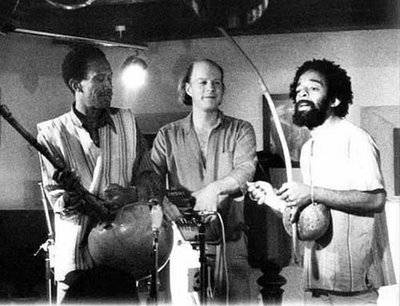
... all considered, if push comes to a shove, I guess I know the title of My Desert Island Record... its "CoDoNa", the first effort of Collin Walcott, Don Cherry and Nana Vansconcellos' supergroup, recorded in analog in September 1978 at Tonstudio Bauer in Ludwigsburg, Germany.
It's a record I always owned, as I remember, so I'm imbedded in this music... it's not a sing-in-the-shower kind-of record, but the music in the grooves has a very ancient yet an always new, untiring patina... I'm never tired in listening to Nana's berimbau, Don's trumpet and Collin's hammered dulcimer and sitar... and their voices, of people who spent their whole life, 'til death which sadly arrived for 2 of them far too early, on the road... they walked all the paths, musically... jazz, ethnic, world-music, folk and they mixed in a very special way, very seldomly so successful.
Sonically, with 301 Shindo in the new slate plinth and B-60 tunable VTA & bronze armpod, with Schick Type A (long version) and Lumiere Type A (short model), ALL the layers created by musicians are so well "here", the trumpet is simply AWESOME, like the bells and voices... despite I own "some" records, I don't remember I ever listened to a better captured series of bells and small percussions, with a superbly true to life decay and right weight, also in a rain stick, where you clearly hear every grain moving inside the wooden tube... the attention is captured for the whole record duration, while the mind easily "see" landscapes: Brazil, India, NYC... skies, woods, grass in the wind and other nature beauties, and yet it's as urban as hinting of countryside.
It's sound I'm talking about, yes, BUT I'm referring to Sound, like the grandfather of Music, echoing nature power and several voices, from thunder to a waterfall to rain to wind and birds and animals...
It's a GREAT record by GREAT musicians, sincerely involved in this timeless sounds, ancient melodies which owns to the Earth itself.
ECM recently reissued the three discs in a triple disk set, "The Codona Trilogy"... so, no apologies at all in not owning them all;-)
Satisfaction guaranteed.

The sweetest wish ever...


During an e-mail swapping like many others, I received today a wish which surprised me for its sweetness; the sincere, peaceful sense of lightness and life of this sentence is deeper than it apparently hints.
"I pray for your audio system life becoming more splendid."
This came from a Japanese gentleman, an audio artisan and a music lover, and I don't know why, BUT I loved a lot receiving this... because an audio system is an extension of a man, a musician and a music lover, and it's as alive as the people who worked around its parts and building and tuning and around the discs, disks and tapes I use almost every day.
It's a shining part of my whole life... and yes, sumimasen doomo, Miyajima-san... I hope so and also pray for you and a more (amore?!?!;-)) peaceful world, as well.

Sunday, April 5, 2009

Friday, April 3, 2009

Music and movie... friends or foes?


I've been an avid original soundtracks and film music collector for most of my life, and still I didn't find the PERFECT music for a movie in my 200+ OST's discs & disks collection... the classic, Alfred Newman's, Rozsa's, Hermann's, Williams', Horner's... them all did a superb job combined with director work, but IMO what really make a film & music connection is when, too seldom, music hints instead of shouting at the audience... Nyman's the master ("The Belly of an Architect" et al.), also Jocelyn Pook in Kubrick's "Eyes Wide Shut" and Laurent Petigand in Wim Wenders' "The Wings of Desire"... isn't a case great music comes from almost unknown composers... the director usually got trapped in some obscure music by chance and this very casual attitude is as mysterious as love and gives to these quite common practice an STP-like character and special quality.
Sometimes music for films is still composed in an old-timey fashion - i.e. musicians are exposed to several views of film itself to absorb the moods, images, the message the director wished to give, etc.
It's like an accelerated exposure to emotions and life which is always behind a melody or a tune... after a sunset or a travel or... well, you got the idea... the process - being a job - is only someway forced.
A fascination... and a miracle if something special stands the abuse.
... then we have the skillfull Hollywood's soundtracks composers... they're clever artisans, they "know" how get tears in audience at the proper, right moment... like pressing an "ON/OFF" switch... well, they produce soundtracks.
... but what I tried to suggest above... it's different. It's true, unique, magic... it's music for films.

Thursday, April 2, 2009

My playlist... an ever-changing, endless musical adventure


... do you remember Bubba's obsession for shrimps in "Forrest Gump" movie: "... potato&shrimps, shrimps & beans, fried shrimps, roasted shrimps, etc, etc...."?

... here is my (musical) version, mantra-like:

NickDrakePinkMoonBertJanschRosemaryLaneCODONA12&3ReneClemencicLafetedel'aneCollinWalcottGrazingDreamsRalphTownerSoloConcertMeredithMonkBookofDaysJohnRenbournTheHermitTirNaNog1stReneClemencicTroubadorsandTrouversToyohikoSatohFranzosischeLutenMusicHopkinsonSmithMoutonKeesOtten/MariusVonAltenaBillEvansSundayatVillageVanguardMilesDavisKindofBlueJohnMcLaughlingMyGoal'sBeyondArvoPartTabulaRasaJeffersonStarshipBlowAgainstTheEmpireRobbieBashoTheFalconer'sArmSteveTibbetsNorthernSongMaurizioAngelettiGoFlyaKiteSandorSzaboAriesandGaiaGratefulDeadBear'sChoiceJohnMartynSolidAirMichaelHedgesAerialBoundariesPentangleSweetChildDavidCrosbyIfICouldOnlyRememberMyNameSteveTibbetsBigMapIdeaRudolfStreicherplaysBottesiniJohnFaheyFareForwardersVoyagerEgbertoGismontiSoldoMeioDiaHolland/Koonitz/Frisell/WheelerAngelSongKeithJarrettLaScalaJohnFaheyVol1andVol2...(to be continued...)

OM

Wednesday, April 1, 2009

WJAAS - The cartridges survey - Part 4 - Mr. K.S. Park's masterpiece: ALLNIC's Verito from South Korea (it's not Japan, but it's Far East, indeed!)


Enter the ALLNIC's Verito MC cartridge... I wasn't aware of this brand nor of this cartridge since few months ago, for which (and for much more...) I must thank my friend David Beetles from Canada.
I'll say it's the cherry on the cake, the outsider of the crop, the alien thing, the novelty under unassuming look: an humble super-light wooden body and a cartridge which is like no other, in building, materials, size and... YES, definitely, YES: sound!
It's about 8 grams, reading at 2 grams with a medium compliance (6 x 10⁻⁶ dyne/cm), 28 ohm impedance and 0,4 mV sensitivity, and, most important, it's THE ONLY cartridge on same par with Lumiere DST in feeling and trueness.
It's so easy to know when a cartridge owns "The Magic": I learned it on my ears, experience and wallet.
The first notes, say yesterday, an Easter related listening Schutz's "Die Sieben Worte Jesu Christi am Kreuz" on Harmonia Mundi's J.F. Pontefract's engineered masterpiece... you hear the voices, male and female, effortlessly coming from the soundstage, right size, where baritone has his place, and you "see" if and when he move his head during singing and both instruments and voice are so natural, like if the time&space recording-bubble would have been tele-transported in yr. music-room in a seldom, far TOO seldom experienced way, as in a music-related sci-fi "Astounding Stories" magazine.
It's magic and VERY few, really an handful artisans are able to infuse such a quality to their transducers... or products, also if products sound TOO machine-made vs. 120 percent, painstakingly man-made.
I'll do not name, humbly as a music lover not a tech-head I am not, any winner on this little survey... but, like David says: "Verito take no prisoners..." to say: every cartridge I auditioned in this tour-de-force cartridges/transformers/arms swapping - so rare for yours truly and his (proverbial) lazyness - well, they all are winners, as they're among the VERY best, but some of the Holy Crop is "more" The Very Best than others.
... with Verito, when I wake up from couch in my music-room and go behind the speakers, I still have the sensation, the weird, impressive feeling I'm going behind a flesh & bone violin-player or a singer - no April's Fool joke involved: this also happens on other days... it's like if the music would be spreading in a completely "linked-to-the-room" way... Roman: is this DPoLS' related or... is it suggestion? IMO, it's more than psycho-acoustics... it's too much heart and soul involved, it's emotions passing or not.
... personally, don't know, nor I care... it's Music at its best.
Thanks to mr. Park for allowing a truly important step closer to the Soul of Music and to David and Koji for the support and friendship.

P.S. - almost forgot to say the Verito gave its best, up now, with Verion/Cotter MC-transformer, an heavenly matching, like the one of Lumiere with WE 618-B... Furthermore, the RS-1A is so easy for cartridges swapping - you pick it up, bring with you on a table, swap carts, reposition it, and listen... all in few minutes - but, nonetheless, I'll look forward to more in-deep listenings mounted on other arms, and also, possibly, naked of the wooden body... Verito's definitely deserves it... hai! (japanese Sho-gun style)

P.P.S. - looking forward in tasting the new Verito Z... still better resolution, says Mr. Park, and... a possible new Queen of Hearts;-) ... have a look to that handsome butterfly on the jewel-box!

Saturday, March 28, 2009

WJAAS - The cartridges survey - Part 3 - Miyajima-san's masterpiece "Otono-Edison/Shilabe"


Spring rains and saturday afternoon... ideally suited conditions... so, here we go: here is the third instalment in exotic, hand-made in Japan MC cartridges.
Here we have a fresh-made "Shilabe" cartridge, hand made by Miyajima-san few days ago: blackwood body, large aluminium-tube cantilever and Shibata diamond.
Miyajima Labs' theory and photographic trivia
I installed it on my Kimura Labs RS-1A rotary-arm and used with WE618-B, Beyer's and Verion/Cotter's transformers.
The sound from this beautiful, about 10 grams cartridge reading between 2,5 and 3,2 grams (I used 3 grams setting)is nothing short of musical, full-bodied and rich, with a very broad tonal palette.
I began with a Bextheude's Trio on Harmonia Mundi and the sound coming from my speakers is moving, the "clock-stopping character" only capable to the very best cartridges is quite present with Shilabe; I obtained the best matching with Verion/Cotter's transformer, which showed a great ability in supporting Shilabe's job, very impressive with difficult harpsichord multi-layered retrival... viola da gamba and violin breathing are lively and true-to-life.
Ambience and soundstage are very natural, never hi-fish or exagerated...
It's a cartridge absolutely various when swapping from one music to another and size of different instruments is well-respected.
Not a flashy cartridge, but very, very pleasant, utterly natural and life-like... reminds me like you're listening at concert from 5th row in a medium sized room: music isn't aggressive and you still enjoy it in a relaxed way the musical nuances.. voices are truly special, with Shilabe: very, VERY harmonically rich and never fatiguing also in an opera, multi-sided "tour de force" listening session.
... and the cartridge is brand-new, with embarassingly low mileage... a VERY promising cartridge from a proud, little, clever japanese artisan... I feel more transformers matching will prove in further improvement: just now tried Harman-Kardon XT-3 and it surpasses all the previously used (more open, quick than Beyer, on same par with Verion/Cotter with better sense of naturality)... "Tuck & Patty" on Windham Hill Rec. sounds really great in this rainy Sunday morning.
I'm enjoying music... not sound... nuff said.

Wednesday, March 25, 2009

WJAAS - The cartridges survey - Part 2 - Kikuchi-san's masterpiece: the "Lumiere DST" replica


... yes,pals: the survey is going on... with no scientific pompousness, nor selfishness, BUT my senses, taste and feeling for music, details and enjoying and having good time... nonetheless, very instructive for me and the few, trusty ears-equipped friends who attended at the various listening sessions.
After some days spent with Oosawa-san's great creation, I had to return - both for comparison-sake AND pleasure - to my trusty "home-sweet-home" sound - i.e. Lumiere DST in its universal incarnation, mounted on an Ikeda headshell on the Ortofon RMG-309, at 3,5 grams, no anti-skating, of course.
After some fiddling with digital arm-loader meter and VTA set-up, I re-found the sound I left some days ago and switched my aural memory "ON";-)
I apologize (no, I don't really care to apologize... just kidding;-)) I used again side two of Grateful Dead's seminal "Bear's Choice" as a starter... and WHAT STARTER, folks!!!
Jerry Garcia's voice, ambience, sense of people attending at the live concert, timbre, trueness, animal-like enjoyment in yours truly... ALL at a time, an orgasm-like musical experience reached me as a warm flood.
Amazingly, that superb sensation of correctness I experienced with Oosawa-san's cartridge, isn't perceived as a separate feature, something which wake-up senses and moves eyebrows, but if analyzed, is WELL here, only mixed, like a God-made mayonnaise, and perceived as a whole, a perfect whole, with all other aspects coming from recordings - you name'em: music first, the sense of it as per composer and performer's souls and wishes, the temporal time bubble containing the time & space essence, the "where" recording happened brought, easily hinted, as an heavenly gift to the ear, then soundstage, macro & micro details retrival, trueness, "PTC" tm ;-) (pleasure transmission capability), "EF" tm;-)) (enjoyment factor), air among instruments and all the paraphernalia we audio lunatics loves so much endlessly chatting about...
Furthermore, Lumiere DST is simply incredible in differentiating one recording from another - i.e. you can swap from lute/viola da gamba/harpsichord on Harmonia Mundi J.P. Pontefract's engineered heavenly sounds to The Grateful Dead "American Beauty", like I'm doing now and you're de-facto using two completely different cartridges... while with Oosawa's you sort-of hear a character in cartridge (or arm or cables or...) when you listen to "Sugar Magnolia" with Lumiere in Gotorama, you simply enjoy Bob Weir and Jerry Garcia's voices, nothing distract the senses - the cartridge, better, the whole analog rig "disappears", changes its character sounding "bad and dirty", "cool", "unpolite" or "airy", "courtly", but always transparent and correct, like this or that music deserves...
Reminds me of a mom who save her child from a car-crash... Lumiere's immolates itself in everchanging-mode, always new to me, the listener, and, to a high degree, to itself... it's the sense of surprise which always amazes me and every listener, track after track, disc after disc, day after day, month after m... well, you got it;-)
"Operator" and "Candyman" on "American Beauty" side one are always new to me... a rare, sought-after feature... what more can I say, as I compare listening to music, old and new, with my beloved Lumiere DST, to enjoy sunset, day after day, without annoying?
... who care if the great Kikuchi-san doesn't reply to e-mails very often, if it's difficult to set-up (DST's not Kikuchi-san;-))) and to match with MC-transformers (my WE 618-B is always the winner, in my system and for my tastes, as I found after more than 15, say FIFTEEN, different matching), if you MUST clean diamond-tip from dust debris every few tracks during same side playback (... and no, I don't live in am overly dusty environment... it's diamond reaching "obscure" parts in groove?!?!)... and if it's utterly fragile (sort-of a giant with clay feet) and it changes in quality depending on "who" in Kikuchi's workshop worked on the cartridge itself - from sublime to... phisically flawed.
"There is no rose without stings", someone said... but the rose can be worth ANY risk, sometime, I must add.
Food for thought...

Tuesday, March 24, 2009

ECM - Editions of Contemporary Music - An appreciation to Manfred Eicher's Work


Saint Manfred Eicher is a Man who cherishes (his) musicians and everyone working with him never feel alone: under his immense wing, music is king. No hype, here, folks... it's plain, unbiased truth!

Here is a (quite) recent review of last solo effort of Ralph Towner for ECM but absolutely revealing of ECM's ethics and aesthetic...


"Ralph Towner By Anil Prasad | June, 2006

Ralph Towner is globally renowned as a classical and 12-string guitar virtuoso, but he would rather be known as an aural novelist. His compositional bent leans toward narratives that communicate distinct points of view and movement. Towner’s new solo guitar CD Time Line is a testament to that approach. From the slow-burning balladry of “Always By Your Side” to the haunting, yet fiery “The Hollows” to the emotionally mercurial vignettes comprising the “Five Glimpses” suite, the album’s 12 pieces explore a diverse palette. Several of these tunes are transcribed in Towner’s new book, Solo Guitar Works Volume 2 [GSP].


Time Line possesses an earthy feel that resulted from Towner breaking free from stoic studio environments. The disc was made in a church located in the Austrian mountain monastery of St. Gerold. The church’s natural ambience lends the album a distinctly open and airy sound.

The album is Towner’s fifth solo-guitar release in a vast catalog of more than 20 titles stretching across nearly four decades on the ECM label. His other discs typically favor quartet, trio, and duo formations featuring jazz luminaries such as guitarist John Abercrombie, drummer Jack DeJohnette, and bassists Gary Peacock and Eberhard Weber.

In addition to his voluminous solo output, Towner is the principal composer, guitarist, and keyboardist for Oregon, a pioneering, boundary-breaking act known for merging world music, jazz, and classical elements. Together with reedsman Paul McCandless, bassist Glen Moore, and percussionist Mark Walker, Towner has helped the group remain a vital ensemble for more than 35 years and 26 albums. Oregon’s latest CD, Prime, offers some of the band’s strongest material in years, including the gorgeous epic “Monterey Suite.”

Why did you record Time Line in a church?

Manfred Eicher, who runs ECM and produced the record, has recorded a lot of classical works there. He really likes the sound and wanted this record to have more of a classical atmosphere. The room is very large and capable of seating 300 people. It was quite dark and a little cold, and I was alone in the church with a bunch of microphones. The control room was elsewhere, so Manfred and the engineer were only able to see me through a television camera. I couldn’t see anyone, so it was like performing a concert in a huge space all by myself. Recording in a church is dissimilar from the perfect, silent confines of a studio. The room’s ambient sound and natural reverberation affected me quite a bit. I had a natural instinct to project a little further. It’s also important to note I wasn’t wearing headphones during the sessions. When you use headphones, everything is compressed. When you play softer, it still sounds very loud, so you don’t hear the same proportions of sound you hear without the electronic boost from the headphones. By not using headphones, I was able to pay more attention to the guitar’s details and dynamics, particularly between the fortissimo and pianissimo. In addition, I think not using headphones heightens the emotional elements of the music.

Describe your recording setup.

We always use two different stereo pairs of mics, with one positioned on my left side at eye level, a couple of feet away from me, and the other set on the right side, a bit lower, the same distance away. We also used ambient mics—one quite high up and centered at long distance, and another in the back of the church. We mixed between the mics, rather than use a lot of equalization. We avoid EQ because if you make a good enough sound on the instrument, you don’t need to meddle with it. When you use equalization, you can usually hear where something is boosted or cut at certain registers. For us, the best solution is keeping things very live sounding by boosting and lowering the levels between the different high-end Sony and Schoeps mics we used. We recorded directly to Pro Tools and entire session took about four hours. We didn’t do any punching in or other corrections. Before I went in, I thought, “Oh boy, I’m not going to have a chance to fix anything.” I was lucky sometimes to have two or three takes in case I covered something in one take I missed in another. That’s the way ECM always works. You accept what you play and realize it represents who you are as a musician. There’s not a lot of time spent making decisions, retracing steps, or perfecting things to the point where you strangle spontaneity. You live with the results. It’s a very natural experience, and you sometimes have to swallow your pride.

What guitars did you play on the record?

I used a classical guitar by Jeffrey Elliott and Cynthia Burton that I’ve had for eight years, and my old Guild 12-string that the company built for me back in 1972. What appeals to me in an ideal guitar is warmth, a lot of mid-range, and a not-too-bright sound. In the case of the Elliot-Burton guitar, I like the fact that it is very clear and really even. All the notes respond exactly the same way across the fretboard, which is unusual. That uniformity is really desirable, because you know exactly what you’re getting when you play. It has a combination of Germanic clarity and Spanish warmth. I really love the guitar. The Guild I like because it has a very strong sound. Typically, 12-string guitars aren’t that loud, because the soundboard needs to be thicker to support all the extra string tension.

You’re not a fan of using pickups on classical guitars. Why?

One of the keys to mastering the instrument is being able to create a sense of sustain through the way you play it. You can use secondary notes and voices and have them tail off in volume to give more prominence to the note you want to sustain longer. It involves a lot of control over your dynamics, secondary voices, and passing tones. When you add a pickup, it tends to make everything sound the same volume, even when you play more quietly. The sound tends to sustain in an almost electric fashion more than it does when you hear the instrument through a mic. I’m not as fussy about the 12-string. In concert, I’ll use a Fishman pickup on it so I don’t have to pound on it so hard, but I’ll mix the signal with my old Beyer M 160 double ribbon mic that has a very flat response. That combination gives the instrument a lot of power in a live setting.

You employ classical guitar technique with an emphasis on the free stroke over the rest stroke. Tell us about this preference.

I don’t use the rest stroke as often as most players because I’ve developed quite a loud free stroke, and this enables me to attack a string without hitting the next lower one. I can play at the same volume as a rest stroke with the same quality of tone. Basically, the free stroke prevents me from getting tangled up. It more easily enables me to articulate a staccato phrase and work with different note lengths by stopping the note with the next finger I’m alternating with. I think it’s unusual that I manage to employ the same classical technique on the 12-string, so you’ll hear me play real unisons within four- or five-note chords, rather than just strumming them. To achieve that, I’ll also use my little finger on my right hand. It’s very similar to a keyboard sound and technique. I’m also a piano player and that similarity is what drew me to the classical guitar in the first place. In terms of plucking, I always use my nails, even on the 12-string. For me, the nail offers a very clear tone. However, before my nail hits the string, the tip of my finger touches it first, so you don’t hear the “clack” of the nail hitting a moving string.

Provide some insight into your creative process.

What I do is almost all composition-based. I’ll sit and play and eventually stumble across something that is recognizable as an idea as opposed to just being a nice sound. When I find the kernel of an idea, it projects itself with a unique identity and jumps out. As I proceed, the idea builds and builds. When things are going well, the piece tends to take on a character that almost demands that it does this or that. I write everything at once. I start with the melody and then the chords, but everything is inseparable and shaded by the harmony. When I hit a wall and start asking myself “Where do I go from here?” I’ll get up and walk around and wait until I hear the next step materialize in my head. Alternatively, I’ll just leave the piece alone for a while. Sometimes, if you play something too much, you play yourself into a semi-deaf state in which everything sounds the same. It’s also good to get away from your instrument and leave it alone for a while. I usually capture music with pen and paper, but once I get deep into the process, I play the piece into a computer running Finale. I play things into it one note at a time, rather than playing the whole piece. Computers aren’t accurate enough about representing how long a note is held, small passing tones, or rhythms when there are a lot of different time values stacked up.

How do you go about telling stories with your compositions?

Writing a good piece is almost like writing a novel. There needs to be a logic to it. You can’t just have a piece sit there, sound pretty, and then be over. There is often a conflict and resolution within my pieces. There can also be a psychological or subconscious plot going on in terms of how the intensities vary. The interesting thing about music is that you can write so a piece has all of the elements of a literary story without literary meaning. As a composer, you have access to the same emotional subtleties. There has to be development and you’re always holding off some type of arrival. You can use deceptive cadences to indicate you’re arriving at something, when in fact you’re arriving somewhere else, which can be depicted with interesting modulations. The listener interprets all of these subtleties as emotional events. You’re creating expectations. Listeners get very bored very quickly if there isn’t that development going on in your playing.

You’ve said one of your key goals as a musician is to transcend your instrument.

A great example of this is Miles Davis. When you listen to his music, you never say “That Miles Davis is such a good trumpet player.” That’s because when you hear his music, it puts you in a difference space. He was a master storyteller. The distinct atmospheres he created ensured you’re never worried about whether or not he could play the trumpet. Rather, you’re thinking about the feelings the music is conjuring up. So, my goal is to play the instrument well enough so people pay attention to the music and forget about the fact they are listening to a guitar. When people are too conscious of what a good guitar player you are, or how clever you are, it puts things into the realm of a circus for me. Your cleverness should be used to make people be nonjudgmental about the instrument and how it’s played, and become swept away by the story you’re telling."

---------------------------------------------------

ECM's sound is something often debated... many hates, many loves it... Manfred Eicher mostly used Rainbow Studio in Oslo and Jan Erik Kongshaug's skill as a sound engineer... only quite recently he began to use acoustic environments and venues... but his aural vision, YES, it's definitely a VERY heavy, coloured, biased I'd dare... his merits are way too great to be missed... but if you listen to... say 10 ECM's discs in a stroke... well, it may happen you'll not listen to ECM's for months...

When I say "I love ECM sound", I sure think about pre-digital, low digits ser. # '70s discs and productions... a glorious, detailed analog sound still unsurpassed... one of my aural masterpieces ever are "CoDoNa" first record, or many Egberto Gismonti's or Ralph Towner's or John Surman's.

The last digitals are much, MUCH better than... say Chick Corea's "Crystal Silence" or Keith Jarrett's "Facing You"... so... confusing?
Maybe... but SO human - i.e. if I like the music, I'll do not blame an awful recording-thing...

One of my ECM's Desert Island discs has always been "Tabula Rasa" by Maestro Part... a disc which owns an urgency, a lava-like calm under the crust... the score contains few notes, indeed... Fratres for 12 cellos and Orchestra is a 12 minutes long glissando... BUT in Tabula Rasa, the two movements 26 minutes long piece, the violin of Gidon Kremer interwoven with Tatjana Grindenko's and the GORGEOUS Alfred Schnittke prepared-piano, like a pagan bell, an echo from the past of humankind... a peana, an homenaje for every and all Men who rest in peace... notes for heart... everytime, I feel me deeply moved, almost in tears... GREAT music.
Sound-wise... the violin is so well captured in the live recording... you must hear no pain in the high pitched overtones, while the piano goes subbass...
I love this music... listening to it, right now, at 7.00 P.M. (GMT).


... are you still here?!?

God is in Details... and care and passion and knowledge!

Monday, March 23, 2009

A great site from Germany - Field-coils drivers, fine workmanship and buongusto, while Grateful Dead plays...


Every week or so the WEB delivers one of its surprises... today, while lazily googling, I discovered this site
Christine and Wolf Von Langa deal in nice mods, restorations and rebuilding from scratch of classic Altec's drivers, adding the sought-after "field-coils" feature instead using permanent magnets... a snobbish, yet highly considered practice in most exclusive audio circles worldwide to reach better frequencies control and overall better performance... and the on-axis screen frequency reports of both 594 and 284 drivers are TRULY amazingly good.
A rare find to share with pals everywhere, while Grateful Dead's "History of Grateful Dead Vol. 1 (Bear's Choice) - Side 2 "Smokestack Lightnin" is spinning in Gotorama and Oosawa glorious analog sound: YES, definitely YES, I'm not an audiophile, BUT a music lover 'til my very last day.... AUHHUUUUUUUU!!!

Saturday, March 21, 2009

March 21st: springtime, at last...


... after a far too long winter, it's springtime!

WJAAS - Western Japanese Audio Appreciation Society - the cartridges survey - Part 1: Oosawa-san's masterpiece.


Chuui: Yoku junbi-seru beki! Hontooni subarashii to omoimasu!!!

... so: Oosawa-san cartridge is still firmly yet delicately grooving my discs in my analog rig.
This cartridge is a true surprise to me... what "she" does is so natural, yet so difficult to obtain... 1,4 grams, 15°C room temperature, as Seo-san hinted... a WE 618B MC transformer and vinyl records, that's it... too simple to be true?!?!
I'm hearing a completely new HUGE quantity of inner details: notes decay here and there, breath noises, harmonic texture I wasn't aware of... I'm right now listening to CODONA 2, where Don Cherry's cornet with its incredible power and dynamics are awesomely, but flawlessly, with a sense of pace and lightness, given.
Now, few moments ago, I changed to "Sargasso Sea", an old ECM I own and listen since '70s... Ralph Towner's classic guitar, 12 strings and piano and John Abercrombie's electric guitar are so full of inner details, now... John's old, I guess tube, guitar amp is close miked in the studio, in full analogue glory and bloom, and the hum of the amp is so true to life to be unbelivable, if compared also to the very best I used since few hours ago, where this feature was only and barely hinted!
More than the air among notes and instruments. what more amazes and almost thrills me is the almost infinite colours I now hear and, most important, appreciate, in EVERY single sound coming from my music system!
It's like someone who temporarily loose his sight and who, after some blind months re-discovers simple things... ALL is felt like a miracle: a flower, the sky, the sun so different during the day...
That's how I feel through what I hear... like I returned home after a loooong trip... reminds me of James Stewart's acting in that old Frank Capra's movie from 1946 "It's a wonderful Life"... after he had his life back from death, he enjoys ALL and EVERYTHING, even the mud on his shoes... so am I!

Happily!

---------------

P.S. - the schematics of the Oosawa's MC pre-pre are intended for DIY, non-commercial use, ONLY.

Tuesday, March 17, 2009

The Power of Music


Last Sunday I was walking along Bacchiglione river, in my town countryside with my dog, enjoying a pale, springtime hinting sun and the tender green and trees and the zest air of the early morning far from traffic pollution... me, my feet and legs, my dog and my humble iPod Shuffle in my ears, with a personal soundtrack by Sigur Ros... I was simply walking, almost not thinking at all, when, like in a Satori, E.S.P.-like mood - my humble, simple, countryside Illumination: I began looking at those plastic bags, red, white, blue, yellow - left from winter floods on trees along the river - like they were not bags, garbage, anymore... the slow motion music by Icelandish group made my eyes to transpose those multicolored moving stuff in the light wind, 10 kilometers from home, like they were little prayer flags in a Tibetan landscape, moving for pilgrims who left to swirl endlessly and pray to Gods in the chilly winds at 5000+ meters...
When I suddenly became conscious about these thoughts, I sort of felt goosebumps, like more than thoughts, I was transported back & forth to Tibet in few moments... my dog hitted me in a narrow passage of the path and... was like I woke up.
Sigur Ros, the soundtrack like experience, the prayer flags... like other times, I swear: no dopes involved;-)
... but what's in Music is, at least, mysterious.

Monday, March 16, 2009

WJAAS - Western Japanese Audio Appreciation Society - the cartridges legacy & the noblest heritage.


I know... Ortofon, Decca, Stanton, Shure, Neumann, EMT, Benz, Van Den Hul are not Eastern or Japanese brand names (also if some of the above mentioned are, or have been, produced in Japan)... BUT there REALLY is something special in Japanese artisans and hands... they've been able to infuse something special in their careful, sometimes freaky, sometimes, maybe always upmarket creations... from Sugano-san (Koetsu), Ikeda-san (Fidelity Research and Ikeda), to Kikuchi-san (Lumiere), Osawa-san (Osawa), Miyajima-san (Otono Edison/Miyajima Labs), Mr. Su Park (ALLNIC's Verito - well, he's from South-Korea, actually, but it's my pleasure to add him in this noble lineage) and to the several unknown, great, humble men who, in their too often overcrowded, tiny workshops, produces little masterpieces able to extract the tiniest details from our beloved vinyls, the Soul of Music.
I recently received from the always friendly hands of my friend Seo Hisashi-san a couple of hand-made little, amazingly well made cartridges: a mono wooden/brass bodied and a stereo one, both with extremely powerful magnets, very near to cantilever and diamond, with low impedance BIG coils and naked, sans-body/nude-look...
Beside their look, where you can appreciate the great miniature job Osawa-san made with his double magnifying lenses, pliers and GREAT, Zen-like patience, you should be here to appreciate the sound, the soul, the air, the trueness, the embarassing high quality which makes other BIG-BUCKS cartridges to sound like broken, el-cheapos disco cartridges!
When I received the two cartridges I left them to rest after the long trip from Japan for a couple weeks - my laziness knows zillions ways to hide & seek itself;-))) - so, I borrowed a glass bell-like dome from my wife shelves and left it in sight, mounted on an RS-3 KimuraLabs Rotary headshell... few days ago, I felt me strong enough for my task... like a Brunello di Montalcino or a Sassicaia's left to breath before tasting, slightly worried and sweaty, I set-up the Osawa's stereo... and, Holy Shit!!!!!
I love lively cartridges, not too spikey, not too middy, not too bassy... BUT having right weight, proportions, air and a sense of effortless liquidness only "here" in live music.
Well... hyperboles or not... as I'm quite familiar with great sounding cartridges since my teens, I simply wasn't prepared to the greatness I experienced and tasted for several untiring, amazing records sides.
Every player in a string quartet - also in Philips sometimes neutral, dry recordings - owns his own air bubble, you can hear at the viola or violin movements during performance in front of mikes... also seldom heard clothes rubbing on instruments, mostly from cello player... a Quartetto Italiano recording I own since I had no greyish hairs and short trousers simply revamped to a new life;-)
Rich, true, lively... words are not apt to describe the level of involvement I experienced and enjoyed! Thanks a lot, Osawa-san... you made Something special: a Time Machine, a Soul Magnifying EarLens for Music, not merely an audio gear or a transducer!
... and thanks a lot to you too, Seo-san!

Friday, March 13, 2009

WJAAS reprise... yes, it's always Western-Japanese Audio Appreciation Society: still alive and kickin'


VANGUARD WORLD or a Japanese Audio Heaven
Thanks to my friend Gabriele who recently pointed it out again... have a look to the always intriguing collection and the rare pixes of the master, a true audio and music "Living Treasure": Sensei Takeshi Mikani-san in his nineties+ - his system - since I saw it, better I was exposed to the picture, so detailed and weird, where a younger Mikani-san smokes his pipe - has been a true lighthouse for me and friends, for decades, now.
Arigatou, sensei-san!

Monday, March 9, 2009

A different approach


Few hours ago me and my friends Giorgio and Angelo tasted and enjoyed a truly seldom seen and heard audio installation... not as usually at a private person home music system, BUT at a-one-of-a-kind audio salon in Chieti, Italy.
The owner, mr. Mino di Prinzio, sure is a businessman since a long, long time, but his true, sincere passion and great ability in choosing his collaborators - young, knowledged and well-informed audio lovers in this business by chance (so jealous;-))) - passion and wealth from a successfull professional life: this unique blend gives to him the power to display a triode powered, horn speakers system of special breed: ALE compression drivers, Sato horns, 211 and 2A3 Sun Audio amps, CEC disk-player and classic Ortofon arm and cartdige and Verdier turntable.
The (almost) cost-no-object system is reached at the end of a long day of audio bliss, so full, rich of nuances, yet improving at every upper-class step going on... lesser people would have been offended by price-tags of these audio gears and speakers, but it's sooo wrong: like not enjoying an orchestra during a concert, but grunting about crazy prices reached by Guarnieri del Gesù or Stradivarious' instruments;-)... the avid experimenter and audio & music lover is amazed, in awe, when the music flows so easy, sincere, sparkling and true to life.
My trusty IVIE IE-30 real-time analyzer showed peaks of Sound Pressure Level at 103-105 db at about 6 meters from speakers during orchestral fortissimos, still keeping with a medium listening level, a full bloom of details and beauty between 78 and 95db with no loss of focus and any heaviness or rawness (floor ambient noise was a little high at 53-55 dbs); also, to someone surprise, the dimensions of, say, a solo acoustic guitar or a choir weren't larger-than-life, BUT incredibly "right"!
A double bass or the orchestra are large, but a jazz combo returns to a lesser, more correct size; the timbre, air among instruments is very first class, and the depth of image is nicely hinted. ... as a plus, the sound is utterly unfatiguing: an hour listening became ten minutes, as apparently perceived...
So what, like Miles would ask;-)?!?
Audio, like Mino also said, is "The best passion in the world"... I agree, with a caveat only... like every passion, it's best sharing it with friends, where you can comment, share impressions, enjoy music, sing-a-long, laugh... sincerely!
Power games, politics, jealousy and angryness aren't for men... let's leave these to "quaraquaqua" (jokers).
... like you cannot honour and be honoured in relating with a Lady like "xxxxxx" - (fill in with your choice... mine is Uma Thurman;-)) - while in your nervous, flawed, unexperienced teens... it's not a matter of aging (yes, ears aren't reaching 15Khz anymore... but who cares), money, or... BUT of experience and selfconsciousness: having listened to a lot of live music, having tasted several audio gears, knowing to what listen to for reaching higher, unbiased pleasure from music, that's it.
Thanks mr. Di Prinzio for your hosting and compliments for the results.
Pleasure is all and we enjoyed a lot "chez vous".

ZWEIGUTEOHREN


...yes, there is something really great going on in Germany about audio and music!
On next May, between 22nd and 24th in a school in Berlin, in Prenzlauerberg, will be held the second Berlin Tasting (S.O.U.N.D. aka "School of Uncompressed Nice Devices";-)))). S.O.U.N.D. Berlin 2009
During the gathering people from many Countries will attend at several listening sessions, endless chatting about "our" topics - i.e. tubes, discs, cartridges, speakers and DIY audio in its several incarnations. ... as a plus, Berlin is still a vinyl-record hunter heaven: classic, jazz, rock...
Like last year in Munchen, in a reality-show fashion, almost 24-hours-a-day for three days, people will share experiences and knowledge and empathy.
Will sure report on the matter... can't stand in my shoes!

Tuesday, February 24, 2009

Julian Cope, I hate you, motherf....er!


... yes, I hate you... before I bought, few years ago your "Krautrocksampler" book I was grooving on... ancient music, viola da gamba, lute, theorbo, chitarrone, harpsichord... long time gone freaking out on Capt. Beefheart, Frank Zappa, Tangerine Dream, Amon Duul, never went deep again on this teenager-music I used to listen to 30+ years ago, you bastard...
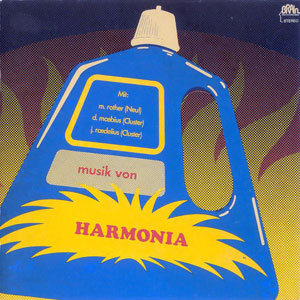
... it's simply innatural, too weird to suffer of such a tsunami in listening, at my venerable age, to Michael Rother, Neu!, Ash Ra Tempel, Amon Duul, Popol Vuh, Can, Faust, Kraftwerk, Harmonia, Cluster, Sergius Golowin... Walter Wegmuller... WALTER WEGMULLER, again!!!
Is it possible I lived all these years without listening to this (apparently a) pastiche where ALL the Cosmic Couriers, Klaus Schulze, Manuel Gottsching, Witthuser and Westrupp, all these geniuses are giving their souls to the most mysterious music ever?
I almost forgot the emotions such a musical exposure was able to give to me.
Since I purchesed your book, Julian, I simply re-traced all the records in yr. 50 discs 2die4 list... maybe 30 or so I already owned, the rest, well... I've been amazed, puzzled, astonished... purchasing what I missed decades ago was an amusement, better, a rebirth... these discs aren't audiophile, they're not collectors items, per se... they're humble waxes containing a light, a time machine of a time full of "hope", of "love"... the Berlin's Wall was still up, yet strongly aiming to go down... smoking dope wasn't yuppie, or cool or relaxing... BUT broadening consciousness! Ah!
... as I often say... I don't need dope, anymore: I produce my own whenever needed... maybe a by-product of such a fondness to this music, long afternoon grooving on Hosianna Mantra and In den Garten Pharaos et al...
... BUT you, Julian... how did you did this... a respectful, respected guy whose music room, right now, seems a pagan church where this Music from the past, TAROT by Wegmuller, resonates with stars and sun and spring and love and hope... how's possible this miracle?
You simply re-discovered the hipstest of musics... you were late, BUT sincere... I remember that in 1980 nobody was listening to this outdated music... Krautrock discs were given for free, heavily discounted at best.
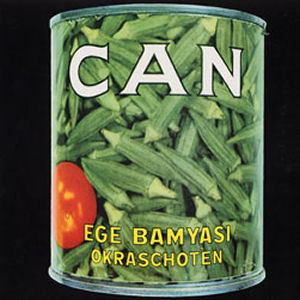
... now, when Tour de France by Kraftwerk or Sergius Golowin, or Tangerine Dream are spinning on my turntable I feel a strenght and a positiveness too seldom experienced... Tago Mago by Can is almost painful, as Yeti by Amon Duul, both naked youth in music, hope for a better world but needing to blame elders and old world and habits... Ege Bamyasi or "Die Sterne" on Tarot by (again, yes...) Wegmuller is... my food and beverage, my soundtrack and amniotic fluid, where I can regenerate myself, I'm fish and fetus, dead and re-born, feel a different heartbeat inside me and in outer world...
... so, for this reason, Julian, please... f..k you... I hate you!
People should be prepared to this all, you... you... and stop smiling on that picture!